

The cycle ran two full hours and the cereal bowls still come out gritty along the bottom. Every drinking glass wears a cloudy film that a towel will not remove, the upside-down mugs on the top rack are each holding a small puddle, and half the load goes back to the sink to be washed by hand at nine at night. Add the low rumble that drowned out the television all evening in an open kitchen, and it becomes clear that the machine under the counter is doing almost none of the job it was installed to do. That gap between what a dishwasher costs and what it actually delivers is exactly what separates top rated dishwashers from the rest.
Get Spotless Dishes on the First Cycle, Every Time
Spencers TV and Appliance has been matching Arizona homeowners to appliances since 1973, and hard Valley water means our team asks about your kitchen before recommending a dishwasher. Shop quiet, efficient built-in dishwashers with professional installation and haul-away handled by our own crews.
The reassuring news is that modern dishwashers have solved nearly every one of those complaints, provided you know which specifications to compare. At Spencers TV and Appliance, our appliance specialists talk through kitchen layout, water hardness, and how a household actually loads dishes before pointing anyone at a model, because those three things predict satisfaction better than price does. This guide covers what makes a dishwasher top rated, how wash systems and sensors drive cleaning, how the three drying systems differ, what decibel ratings really mean, rack design and capacity, brand reliability and installation, and the maintenance that keeps results consistent.
Key Takeaways
- Cleaning and drying outrank everything else: A quiet dishwasher that leaves film on glassware is not a good dishwasher, no matter what it cost or how many cycles it lists.
- Long cycles are a feature, not a defect: Top performing machines often run two hours or more because longer, lower-temperature washing cleans better and uses less water than a short hot blast.
- Drying system decides the wet dish complaint: Condensation drying needs a stainless tub and rinse aid, and it will still leave plastics damp, which is a household-fit question rather than a defect.
- Hard water changes the answer in Arizona: Valley water hardness affects spotting, film, and heating element life more than any single spec on the tag.
What Makes a Dishwasher Top Rated
Testing organizations and retailer service data converge on the same short list of criteria, and it is worth knowing what they weigh before reading any ranking.
- Cleaning performance on baked-on and dried-on soil, tested on standardized loads
- Drying effectiveness, measured separately on glass, ceramic, and plastic
- Noise level in dBA under normal operation
- Cycle time on the normal and auto programs
- Capacity in place settings and rack flexibility
- Energy and water use per cycle, including ENERGY STAR certification
- Service and repair rates over the first several years of ownership
Cleaning and drying carry the most weight for an obvious reason. Everything else on that list is a comfort factor, while those two determine whether you rewash dishes at the sink. A 39 dBA machine that leaves film on every glass has failed at its actual job quietly.
Sources, and How to Read Them

Rankings come from independent testing organizations like Consumer Reports, from repair and retailer service data, and from owner reviews. Each has a bias: lab testing measures controlled loads rather than your loads, repair data over-represents units that failed, and reviews skew toward the delighted and the furious. When a statistic appears without a named source and a year attached to it, treat it as marketing rather than evidence.
Top Rated Is Not the Same as Best Selling
A best seller usually reflects price point, promotion, and builder purchasing, not performance. Price is also a weak predictor of cleaning ability. Above roughly the mid-tier, additional money buys quieter operation, better racks, nicer finishes, and drying refinements far more than it buys cleaning power, because the wash systems in mid and upper tier machines are frequently similar.
What is safe to ignore is a long list of specialty cycles. Most households use normal, heavy, and a quick wash. Cycles for baby bottles, wine glasses, and specific cookware sound useful on a spec sheet and go untouched for a decade.
Read more:
6 Key Benefits of GE Profile Dishwashers
The Best ADA Compliant Dishwashers: A Guide + Reviews
A Scoring Framework You Can Apply to Any Spec Sheet
Rank these four against your own household before you compare models, and let the ranking break ties:
- Cleaning: Look for a soil sensor, multiple spray arms with a targeted lower zone, and a sanitize cycle. Weight this highest if you run heavy pots or skip prerinsing.
- Drying: Identify the drying system by name and match it to whether your household washes many plastic containers.
- Noise: Under 45 dBA if your kitchen opens to a living space, and under 50 dBA for anything else.
- Capacity: Count place settings and check for a third rack if flatware and utensils crowd your upper rack.
Cleaning Performance: Wash Systems, Sensors and Cycles
Cleaning power comes from a handful of mechanical elements, and understanding them makes spec sheets readable.
Spray Arms, Zones and Water Pressure
Most dishwashers use two spray arms, one under the lower rack and one under the upper. Better machines add a third arm or a dedicated feed to the top rack, plus targeted spray zones aimed at the back or center of the bottom rack where casserole dishes go. More arms mean more even coverage, and even coverage is what prevents the single dirty plate at the back of a load.
Water pressure and pump design matter as much as arm count. A machine that maintains pressure across a full load cleans consistently, while one that loses pressure when the racks are packed leaves the outer positions dirty.
Filtration Is the Big Differentiator
Two approaches exist, and the trade is real:
- Hard food disposers with a grinder: These pulverize food debris and flush it out, which means no filter to clean. The cost is noise, since a grinder is a motor with blades, and these machines rarely go below about 47 dBA.
- Filter systems: A fine mesh filter traps debris, which is dramatically quieter and more efficient. The cost is maintenance, since the filter needs rinsing under the tap regularly, and a neglected filter is the leading cause of the food-residue complaints owners blame on the wash system.
Nearly every quiet dishwasher on the market today uses a filter. If a machine is rated at 44 dBA or below, plan on cleaning a filter.
Soil Sensors and Automatic Cycles
A soil sensor measures water turbidity during the wash and adjusts water use, temperature, and cycle length to match how dirty the load actually is. On an auto cycle, a lightly soiled load may finish faster and use less water, while a heavy load extends automatically. Sensors are one of the features genuinely worth paying for, because they make the machine adapt instead of forcing you to guess.
What Each Cycle Is Actually For
- Normal: Everyday mixed loads. The cycle nearly all published performance figures are based on.
- Heavy or pots and pans: Higher temperature and longer wash for baked-on soil and cookware.
- Auto: Lets the soil sensor decide. The best default for most households.
- Express or quick wash: Lightly soiled dishes in under an hour, using more water and heat to make up for lost time.
- Rinse only: Holds a partial load without odor until you run a full cycle.
- Sanitize: An NSF certified high-temperature final rinse that reduces bacteria, useful for cutting boards and sick households.
Why Two Hours Is a Good Sign

Long cycles feel like a downgrade and are actually the opposite. Cleaning is a function of time, temperature, chemistry, and mechanical action. Modern efficiency standards limit water and energy, so manufacturers trade in the one resource that is free: time. A two-hour normal cycle with a soil sensor typically uses three to five gallons of water and cleans better than a 55-minute cycle from 20 years ago that used twice that.
Scrape, Do Not Rinse
Prerinsing under the tap is a habit worth breaking. Soil sensors read how dirty the water is, and a load of prerinsed dishes reads as clean, so the machine runs a shorter, gentler cycle than the baked-on lasagna dish in the corner actually needs. Modern detergents also contain enzymes that need food residue to work against. Scrape the solids into the trash and load it dirty.
Hard Water Is the Hidden Variable
Mineral content changes everything about dishwasher results. Calcium and magnesium in hard water bind with detergent, reducing its effectiveness, and leave behind the white film and cloudy glassware that owners assume means a broken machine. Hard water also builds scale on the heating element, which slowly reduces both wash temperature and drying performance.
Rinse aid is the direct answer to spotting, because it breaks the surface tension of water so it sheets off dishes instead of beading and drying in place. In hard water areas, rinse aid is not optional, and the dispenser setting usually needs to be turned up from the factory default. Detergent choice matters too: powder and gel formulas let you increase the dose for hard water, while pods deliver a fixed amount that may be too little for very hard water and wasteful for soft.
Drying Systems Explained: Heated, Condensation and Zeolite
The wet dish complaint has one cause, and it is almost always the drying system rather than a fault.
Heated Element Drying
A heating element in the tub floor warms the air after the final rinse and evaporates the water. It is the most effective approach on plastics, since plastic does not hold heat well enough for other methods to work. The trade is energy use and the risk of warping lightweight plastic items or melting anything that slips off the rack onto the element.
Condensation Drying
Common on European-style machines and increasingly everywhere. A final rinse heats the dishes, then the stainless steel tub, which cools faster than the dishes do, attracts the moisture as condensation and drains it away. It requires a stainless tub to work, because a plastic tub warms up with the dishes and gives moisture nowhere to go. Condensation drying is gentler and much more efficient, and it works beautifully on glass and ceramic. It struggles on plastics, which do not retain enough heat to drive off their own moisture.
Rinse aid is essential to condensation drying. Without it, water beads and clings instead of sheeting off, and the system has too much water left to remove. Most wet dish complaints on condensation machines trace to an empty rinse aid dispenser.
Fan-Assisted and Auto-Open Drying
Some models add a fan to move humid air out of the tub, and many European-style machines pop the door open a few inches at the end of the cycle to vent steam. Auto-open drying is genuinely effective and it is worth knowing about before installation, because the door will swing open on its own into a walkway.
Zeolite and Mineral Drying
The most advanced approach uses a natural mineral that releases heat when it absorbs moisture. Humid air passes over the mineral, which pulls out the water and gives back warmth, and the mineral regenerates during the next wash cycle. It dries plastics far better than condensation alone without the energy cost of an element. It is found on premium models, and it is one of the few premium features that solves a complaint people actually have.
Tub Material
Stainless steel tubs conduct heat for condensation drying, resist staining and odor, and dampen sound better than plastic. Plastic tubs are found in entry-level machines, cost less, and are more forgiving if something falls onto the tub floor. If drying performance and noise matter to you, a stainless tub is close to a requirement.
Matching Drying to Your Household
- Households that wash mostly glassware, plates, and ceramic: condensation drying is efficient, quiet, and fully adequate.
- Households with kids, food storage containers, and plastic cups: heated drying or a zeolite system, or plan on towel-drying plastics.
- Households in open kitchens who run the dishwasher overnight: auto-open drying, provided the door has room to swing.
Top Rated Dishwashers Compared by Feature and Performance
| Tier | Typical Noise | Drying System | Tub and Racks | Capacity | Best For |
|---|---|---|---|---|---|
| Entry built-in | 50 to 55 dBA | Heated element | Plastic or partial stainless tub, 2 racks | 12 to 14 place settings | Closed kitchens and occasional use |
| Mid-range | 44 to 48 dBA | Heated or hybrid condensation | Stainless tub, third rack common | 14 to 16 place settings | Busy family kitchens |
| Premium | 39 to 44 dBA | Condensation, fan-assisted or zeolite | Stainless tub, adjustable third rack | 15 to 16 place settings | Open concept homes where noise matters |
| Panel-ready integrated | 38 to 42 dBA | Condensation or auto-open | Stainless tub, fully adjustable racks | 14 to 16 place settings | Design-focused remodels |
Read the table by starting with the noise column if your kitchen opens onto a living space, and with the drying column if wet plastics are your recurring complaint. The biggest performance jump per dollar happens between the entry and mid-range tiers, where a stainless tub, a soil sensor, a third rack, and roughly eight fewer decibels all arrive at once. Above the premium tier, the additional money mostly buys finish, integration, and a few more decibels of quiet rather than cleaner dishes.
Noise Ratings, Capacity and Rack Design
What a Decibel Rating Actually Sounds Like
The dBA scale is logarithmic, so small numbers represent large differences:
- 50 to 55 dBA: Clearly audible in the same room, and disruptive in an open kitchen.
- 44 to 48 dBA: Quiet. Noticeable if you listen for it, easy to talk over.
- 38 to 42 dBA: Nearly silent. Many owners check the display to confirm it is running.
Lower ratings come from more insulation around the tub, better door seals, a brushless motor, and a filter system instead of a grinder. In a Valley home with a great room layout where the kitchen island faces the television, the difference between 50 and 44 dBA changes whether you run the dishwasher after dinner or wait until bedtime.
Capacity in Place Settings
Dishwasher capacity is measured in place settings, and one place setting is a dinner plate, a salad plate, a bowl, a cup and saucer, a glass, and a full set of flatware. Standard 24 inch models hold 12 to 16 place settings. Fourteen is the common mid-range figure and covers most families comfortably.
Sizes beyond the standard 24 inch built-in exist for specific situations. An 18 inch compact model fits condos, casitas, and small kitchens where cabinet space is scarce. Dishwasher drawers, sold as single or double units, let you run half loads independently and suit couples or a second prep area, at a higher price per place setting.
Rack Design Determines Real Capacity
Rated capacity assumes a perfectly arranged load, and real kitchens never produce one. Rack flexibility is what turns a rated number into usable space:
- Adjustable and fold-down tines: Fold flat to make room for mixing bowls, pots, and casserole dishes rather than forcing them into a slot built for plates.
- Height-adjustable upper rack: Raise it for tall glasses below, or lower it for tall items on top. Look for adjustment that works with the rack loaded.
- Bottle jets: Dedicated nozzles that spray up into water bottles and narrow vases, which otherwise never come clean.
- Stemware holders and clips: Hold wine glasses steady so they do not tip and chip.
The Third Rack
A third rack is a shallow tray across the top for flatware, spatulas, measuring cups, small lids, and coffee mugs. It is consistently the upgrade owners appreciate most, because it clears the flatware basket out of the lower rack and frees a full row for plates. The trade is a few inches of clearance from the upper rack, so very tall glasses may no longer fit standing up. Better models make the third rack adjustable or notched to preserve height in one section.
Loading for Spray Arm Coverage
Most persistent dirty-dish complaints are loading problems, not machine problems, and they follow from where the spray arms actually reach:
- Face soiled surfaces toward the center of the rack, since spray arms throw water outward from the middle.
- Keep bowls and cups angled, not flat, so water reaches the interior and drains back out.
- Do not let a large platter or cutting board on the outer left or right position block the lower spray arm’s path to the rest of the load.
- Spin both spray arms by hand after loading. If either one hits something, that item is blocking the wash for everything behind it.
- Leave space between items, since dishes touching each other shield the surfaces where they meet.
Top Rated Dishwashers: Pros and Cons Worth Knowing
Moving up from a builder-grade dishwasher buys quiet, dry, genuinely clean dishes, and it costs money and patience. A premium machine takes longer per cycle and asks you to keep rinse aid topped up and a filter rinsed. Here is the trade laid out plainly.
Pros
Dishes come out clean the first time
A soil sensor, better spray coverage, and a proper filter system end the habit of rewashing half the load at the sink.
Genuinely quiet operation
A 42 dBA machine in an open kitchen runs through a conversation or a movie without anyone noticing, which changes when you are willing to run it.
Less water than hand washing
A modern certified dishwasher uses roughly three to five gallons per cycle, well under what a running tap consumes washing the same load.
Rack flexibility that fits more per load
Fold-down tines, an adjustable upper rack, and a third rack turn a rated capacity into a usable one, which means fewer cycles per week.
Cons
Higher upfront cost
Premium quiet operation, stainless tubs, and advanced drying systems carry a real price premium over builder-grade machines.
Longer cycle times
Efficient wash programs commonly run two hours or more, so a load started after dinner is not unloaded before bed.
Reliability, Brands and Installation Considerations
How the Brands Compare
- Bosch: The reference point for quiet operation and condensation drying, strong on reliability, positioned mid-range to premium.
- Miele: Premium and built around long service life, with a smaller service network and a higher price.
- KitchenAid: Strong wash performance and heavy-duty racks in the upper-mid tier, built by Whirlpool.
- Whirlpool and Maytag: Dependable, straightforward machines at accessible prices with excellent parts availability.
- GE and GE Profile: A broad line from basic to premium, with strong local parts and technician support, and Café as the design-forward tier above Profile.
- LG and Samsung: Feature-rich with strong drying technology and competitive noise ratings, generally mid-range to premium.
Lifespan and Common Failures
A dishwasher typically lasts about 9 to 12 years. The components that most often need service are control boards, wash and drain pumps, door latches and springs, and drain assemblies including the hose and check valve. Warranty structure is usually one year of parts and labor, and some brands add longer limited coverage on the stainless tub, the racks against rust, and the motor. Rack warranties are worth reading, because rust spots on tines are a common mid-life complaint in hard water.
Installation Requirements
- A cutout roughly 24 inches wide, 34 to 35 inches high, and 24 inches deep for a standard built-in
- A hot water supply line with an accessible shutoff valve
- A drain connection with a high loop or an air gap, which prevents sink water from siphoning back
- A dedicated 15 or 20 amp circuit, either a receptacle in the adjacent cabinet or a hardwired connection
Front Control Versus Top Control
Front control models put the buttons and display on the face of the door, which is easier to read at a glance and simpler for anyone who does not want to open the door to check progress. Top control models hide the panel on the top edge, giving a clean uninterrupted front. Most top control machines add a status light or a time projection onto the floor so you can see whether the cycle is running.
Panel ready and fully integrated models take a custom cabinet front so the dishwasher disappears into the run of cabinetry entirely. These require accurate panel dimensions and weight, which is a detail worth confirming with your cabinet maker before ordering.
Replacement Versus New Construction
Replacing an existing dishwasher is usually straightforward, but two things complicate it. Older cutouts can be slightly undersized for modern units, and flooring installed after the original dishwasher went in can raise the floor height enough that the new machine will not slide out later. Countertops, particularly stone, need the mounting brackets attached to the side cabinets rather than the underside of the counter.
Here is the detail our installers see behind more service calls than any component failure: a dishwasher that is not level front to back and side to side will not drain completely, will leave standing water in the tub, and will let the door seal unevenly. Add a drain hose without a proper high loop and sink water flows back into the tub, producing an odor complaint the manufacturer gets blamed for. Both take minutes to do right at installation and cause years of frustration when they are skipped, which is the strongest practical argument for professional installation on a machine that is plumbed, wired, and hidden under a counter.
Keeping Your Dishwasher Performing Like New
The Routine
- Pull and rinse the filter under warm water monthly, more often if you skip prerinsing entirely.
- Wipe the door gasket and the lower edge of the door, where debris and film collect out of sight.
- Check the spray arm holes for seeds, labels, and bits of debris, and clear them with a toothpick.
- Refill the rinse aid dispenser when the indicator shows low, and raise the setting if you see spotting.
- Run a cleaning cycle every one to three months with a dishwasher cleaner or a cup of white vinegar on the top rack, which removes mineral scale and grease film.
Detergent, Rinse Aid and Water
Pods are convenient and dose a fixed amount, which is ideal for average water and inadequate for very hard water. Powder and gel let you adjust the dose upward, which is the better choice in the Valley. More detergent does not mean cleaner dishes past a point, though, because excess detergent does not fully rinse away and leaves its own film.
A whole-home water softener is the most complete fix for hard water, and it improves dishwasher results, water heater life, and every faucet in the house at the same time. Scale on a heating element reduces its efficiency year over year, which shows up as slower drying long before anything actually breaks.
Troubleshooting the Common Complaints
- Cloudy glassware: Usually hard water mineral deposits or etching from too much detergent plus too hot a wash. Try more rinse aid and less detergent first.
- White film on everything: Hard water and insufficient rinse aid. Raise the rinse aid setting and run a vinegar cleaning cycle.
- Food residue on dishes: A clogged filter, blocked spray arms, or overloading. Check the filter first, then spin the arms by hand.
- Standing water in the tub: A clogged filter or drain, a kinked drain hose, or a missing high loop.
- Odor: Trapped food in the filter or under the gasket, or drain water siphoning back into the tub.
What Should Never Go In
Cast iron loses its seasoning and rusts. Wooden cutting boards, bowls, and knife handles crack and dry out. Sharp knives dull against the racks. Some nonstick cookware degrades under high heat and harsh detergent, and anything labeled hand wash only means it. Aluminum bakeware and pans darken and stain from dishwasher detergent.
A Checklist to Keep
- Monthly: Rinse the filter, wipe the gasket, check the rinse aid level.
- Quarterly: Run a cleaning cycle, inspect the spray arm holes, check the racks for rust or chipped coating.
- Twice a year: Check the drain hose loop, look for leaks under the sink, confirm the unit is still level.
- Annually: Inspect the door seal for cracks, and confirm the water supply shutoff valve still turns freely.
What Valley Hard Water Does to Your Dishwasher Results
Phoenix metro tap water is among the hardest in the country, drawn largely from the Colorado River and Salt River systems, and the annual water quality reports published by cities across the Valley routinely put hardness well into the range considered very hard. That number explains more dishwasher complaints here than any brand or model difference does. Minerals bind with detergent so less of it works, they deposit on glass as the film people mistake for permanent etching, and they build scale on the heating element that quietly reduces wash temperature and drying performance year after year. A dishwasher that would be excellent in Seattle can look mediocre in Chandler for reasons that have nothing to do with the machine.
- Turn the rinse aid dispenser up from the factory setting on day one. The default is calibrated for average water, and Valley water is not average.
- Choose powder or gel detergent over pods so you can increase the dose to match hardness, and increase it in small steps until spotting stops.
- Prioritize a stainless steel tub, which resists mineral staining far better than plastic and supports condensation drying.
- Run a descaling cleaning cycle every one to three months rather than the once or twice a year most manuals suggest.
Look at whole-home softening if you are already remodeling, since the same investment protects the water heater, the ice maker, and every fixture in the house.
- Do not confuse film with etching. Film wipes off with a vinegar soak; etching is permanent glass damage from too much detergent in soft or softened water, which is why the dose should go up carefully rather than all at once.
Read more:
6 Best Dishwashers for Arizona Hard Water
Best Built In Dishwashers | Top Rated Models Reviewed
The dishwashers below cover the tiers laid out in the comparison table, from a dependable value model to two design-forward Café units, so the guidance above maps onto machines you can put in your kitchen this month. All four are standard 24 inch built-ins that drop into a typical cabinet cutout. Our team can confirm noise ratings, rack layouts, and drying systems on any specific model before you decide.
GE 24” Fingerprint Resistant Stainless Steel Built-In Dishwasher
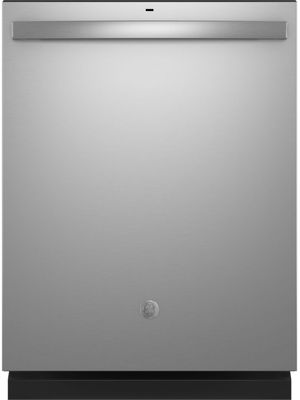
This is the mainstream workhorse of the group, and mainstream is a compliment in dishwashers. GE builds a straightforward, well-supported machine with parts and technician coverage that is as good as anything in the Phoenix metro, which matters more in year six than any feature on the spec sheet. The fingerprint resistant stainless front stays presentable in a kitchen where the dishwasher gets opened with dinner on everyone’s hands. It fits a standard 24 inch cutout, so replacing an aging builder-grade unit is a same-day job for our installation crew.
Top Features
- Standard 24 inch built-in fit: Drops into a typical cabinet cutout, which keeps a replacement simple and quick.
- Fingerprint resistant stainless finish: Holds a clean look in a high-traffic kitchen without constant wiping.
- Excellent local parts and service support: GE is among the easiest brands to get serviced quickly in the Valley, which shortens any downtime.
- Mainstream tier value: The performance jump from a builder-grade machine at the point on the price curve where it costs the least.
Café 24” Fingerprint Resistant Stainless Steel Top Control Built-In Dishwasher

Top control is the reason to look at this one. Hiding the panel on the top edge of the door gives an uninterrupted stainless front, which is what makes a dishwasher blend into a modern kitchen instead of interrupting it. Café is the design-forward tier of the GE family, so the engineering underneath is well-supported while the hardware and finish are a clear step up. Fingerprint resistant stainless handles the reality of an open kitchen island, and the standard 24 inch footprint means it goes where your current dishwasher is.
Top Features
- Top control panel: A clean, uninterrupted door front with the controls hidden along the top edge.
- Café design tier: Upgraded finish and hardware over the mainstream line, built on well-supported GE engineering.
- Fingerprint resistant stainless steel: Keeps a smudge-free face on a dishwasher that sits in full view of the living space.
- Standard 24 inch built-in: Replaces an existing unit without cabinet modification in most kitchens.
Café 24” Matte Black Built-In Dishwasher

Matte black is the statement finish in this lineup, and it is the right answer for kitchens built around dark cabinetry, brass hardware, or a contemporary desert-modern palette that is common in newer Scottsdale and North Phoenix homes. Café lets the hardware be customized, so the dishwasher can match a range and a refrigerator across the whole kitchen rather than being the one appliance that does not fit. Underneath the finish, it sits in the premium tier of the GE family, where quieter operation and better racks live.
Top Features
- Matte black finish: A designer alternative to stainless for dark or contemporary kitchens, and it hides fingerprints well.
- Customizable hardware: Café handles can be matched across appliances so the kitchen reads as one set.
- Premium tier build: Sits above the mainstream line where quieter operation and more flexible racks are found.
- Standard 24 inch cutout: Full-size capacity in a footprint that fits existing cabinetry.
Whirlpool 24” Fingerprint Resistant Stainless Steel Top Control Built-In Dishwasher
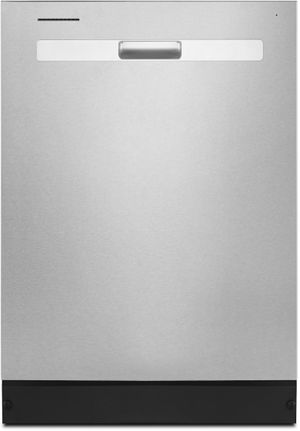
The value pick, and the one to look at if a dishwasher quit last week and the kitchen needs to work again. Whirlpool builds enormous volumes on shared platforms, which means parts sit on local trucks and repairs are inexpensive when they happen, exactly the reliability argument made earlier. It still delivers the top control clean front and a fingerprint resistant stainless finish, so the value tier does not look like the value tier. For a rental, a second kitchen, or a household that wants dependable rather than deluxe, this is the sensible answer.
Top Features
- Top control clean front: The uninterrupted door face usually reserved for higher tiers, at a value price.
- Fingerprint resistant stainless steel: Practical finish that stays presentable with minimal upkeep.
- Widely available parts and service: Whirlpool’s shared platforms keep repairs fast and inexpensive across the decade you own it.
- Standard 24 inch built-in fit: A direct replacement for a failed dishwasher without any cabinet work.
Our showroom floors carry more dishwasher brands and finishes than this group, including panel ready and 18 inch compact models. Bring a photo of your kitchen and our team will compare noise ratings and rack layouts with you in person.
Finding the Top Rated Dishwashers for Your Everyday Routine
Cleaning performance, drying system, and noise rating decide satisfaction far more than feature count does, rack flexibility determines how much you can actually fit in a load, and consistent maintenance keeps the results spotless for years. The top rated dishwashers for your house are the ones matched to your kitchen layout, your water conditions, and the way your household actually loads dishes.
See them in person before you decide. Shop dishwashers at Spencers TV and Appliance online or visit a showroom in the Phoenix metro, where you can pull out the racks, check third rack clearance against your tallest glass, and compare interiors side by side. Our staff will ask about water hardness, kitchen layout, and whether plastics are a daily part of your load. Our own crews handle professional installation including water and drain hookup, removal of the old unit, and local service and warranty support afterward. Buying an appliance online means a box on the driveway and a search for someone willing to plumb it, which is a very different experience from having the people who sold it also install and service it.
Read more:
Best Budget Dishwashers for the Modern home
Rethink Dish Care: A Thermador Dishwashers Guide + Reviews
Frequently Asked Questions About Top Rated Dishwashers
A dishwasher rated at 44 dBA or below is considered quiet, and anything from 38 to 42 dBA is close to silent in normal use. Ratings of 50 to 55 dBA are clearly audible in the same room, which is why an open concept kitchen usually justifies paying for a lower decibel rating.
No, scrape the solids into the trash and load dishes without rinsing them, because the soil sensor measures how dirty the water is and adjusts the cycle accordingly. Prerinsing makes the load read as clean, so the machine runs a lighter cycle, and modern enzyme detergents actually need food residue to work against.
Condensation drying relies on a hot final rinse and a stainless tub that cools faster than the dishes, and it needs rinse aid so water sheets off instead of beading. Plastic items stay wet most often because plastic does not retain enough heat to evaporate its own moisture, which is a limitation of the drying system rather than a fault.
A third rack is consistently the upgrade owners appreciate most, since it holds flatware, spatulas, small lids, and measuring cups, which frees an entire row of the lower rack for plates. The trade is a few inches of upper rack clearance, so check your tallest everyday glass against the model you are considering.
A dishwasher typically lasts about 9 to 12 years, with control boards, pumps, door latches, and drain assemblies accounting for most service calls along the way. Hard water shortens that range by scaling the heating element, which is why regular descaling cycles matter more in the Phoenix metro than in most of the country.
Cloudy film is almost always hard water mineral deposits combined with too little rinse aid, and it wipes away after a vinegar soak, which confirms the diagnosis. Permanent cloudiness that will not wipe off is etching, caused by excessive detergent in soft or softened water plus high wash temperatures, and that damage cannot be reversed.
Why Trust Spencers TV & Appliance?
Since 1973, Spencer’s TV & Appliance has grown to 11 locations throughout the Phoenix Metropolitan Area. The secret to our longevity is simple: personal service. Customer satisfaction has always been the focus of our business, and throughout the years, we have been able to work hard with our suppliers to bring you the best prices. After all, getting customers the best price and personal attention is how we compete with big-box stores, day in and day out.
Not only do we offer top-rated appliances, name-brand electronics, and the best mattresses on the market but we also provide water treatment solutions and perform kitchen design services. Stop by your nearest Spencer’s and see what you’re missing!
Shop Dishwashers at Spencers
At Spencers TV & Appliance, we provide high-quality, name-brand products at great prices. Your friends in the business are always happy to help you choose the best mattress for lower back and leg pain. Call us, or better yet, stop by at one of our locations in the Phoenix, Scottsdale, and Glendale regions. Visit us today!