
The tape measure says the gap between the cabinets is 36 inches, the spec sheet in your other hand lists three different depth numbers, and none of them tells you whether the door will clear the island when it swings open. That is the moment most kitchen projects stall. The fridge that was supposed to sit flush with the countertop shows up and juts four inches past the granite edge, the walkway shrinks, and the crisper drawer will not pull out all the way because the hinge side is jammed against a wall. Counter depth refrigerator dimensions are printed on every product page, but the numbers are only useful once you know which one is being measured and where it is being measured from.
Here is the good news: the fix is simpler than it looks once the vocabulary stops working against you. At Spencer’s TV & Appliance, our team measures, delivers, and installs refrigerators across the Phoenix metro every week, so we know exactly which numbers decide a fit and which ones are marketing. This guide covers the real depth, width, height, and capacity ranges you should expect, a step-by-step way to measure your opening, how each door style changes the footprint, the clearance and airflow rules for Arizona kitchens, and the spec-sheet details buyers misread right up until the delivery truck arrives.
Get the Perfect Fit Before You Buy
Our team helps you match cutout width, height, and depth to the right counter depth refrigerator, then handles delivery and professional installation across the Valley. Shop counter depth models online or see them in person.
Key Takeaways
- Counter depth means 24 to 30 inches: The cabinet box measures roughly 24 to 27 inches deep, and doors plus handles push the total to about 28 to 30 inches. Only recessed, built-in, or panel-ready units achieve a truly flush face.
- 36 inches is the mainstream width: Widths run from 30 to 48 inches, with 36-inch models dominating the market and 30-inch and 33-inch options covering galley and condo kitchens.
- You trade cubic feet for the flush look: A counter depth unit typically holds 4 to 6 fewer cubic feet than a standard-depth model of the same width, because every inch of lost depth costs about a cubic foot of interior space.
- Cutout dimensions are not appliance dimensions: Add 1 to 2 inches behind the unit for airflow and about a half inch on each side, then measure the delivery path before you buy anything.
What Counter Depth Actually Means in Refrigerator Dimensions
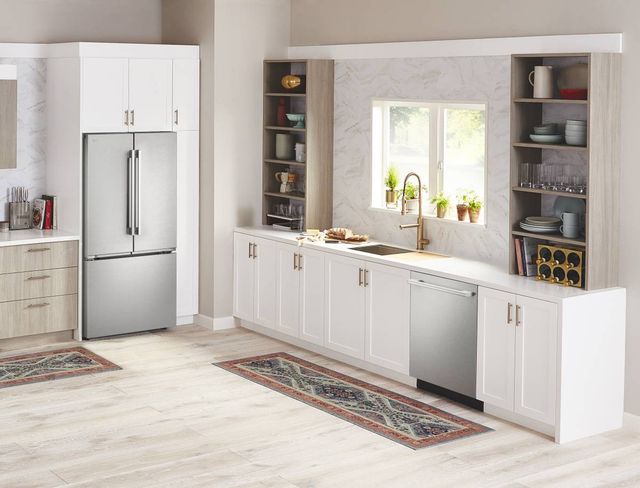
Counter depth is named after cabinetry, not refrigerators. Standard base cabinets are built about 24 inches deep. Add a finished countertop with a typical overhang and the front edge of your counter lands somewhere near 25 to 26 inches from the wall. A counter depth refrigerator is designed so its cabinet body stops close to that same line instead of standing several inches proud of it.
In practice, counter depth refrigerator dimensions measure anywhere from 24 to 30 inches deep. The spread is that wide because manufacturers measure different things. Some list the case only. Some include the door. Some include the handle. Some include the rear water box that houses the fill valve.
Here is the misconception worth clearing up before you shop. Counter depth means the cabinet sits nearly flush, not that the whole appliance disappears into the run of cabinets. Doors and handles almost always project two to four inches past the counter edge. That is normal and expected. A truly flush face requires a recessed opening, a built-in unit, or a panel-ready column with custom door fronts.
The Five Terms You Need to Read a Spec Sheet
Every measurement argument comes down to these definitions, so keep them straight:
- Appliance depth: the total depth of the unit as the manufacturer measures it, usually including the door and sometimes the handle.
- Depth without handles: the case plus the closed door, with handle projection removed. This is the number that compares most honestly to your countertop depth.
- Case depth: the cabinet body alone, doors excluded. Useful for planning a recessed opening.
- Depth with doors open: how far the open door reaches at 90 degrees, which is what collides with an island.
- Cutout width: the finished opening the appliance has to slide into, always larger than the appliance itself.
One last framing point. Counter depth is a footprint category, not a capacity category. Two refrigerators can both wear the counter depth label and differ by three inches of depth and six cubic feet of storage. The rest of this guide shows how to resolve that trade-off in your kitchen instead of in a return.
Read more:
- Finding the Perfect Refrigerator Size for Your Kitchen: Size Chart Included!
- Is There a Standard Fridge Depth?
The Real Height, Width, Depth, and Capacity Ranges You Should Expect
Start with the broad ranges, then narrow down. Across the category, expect these numbers:
- Depth: roughly 24 to 30 inches, or 24 to 27 inches excluding handles.
- Width: roughly 30 to 48 inches, with 36 inches the volume seller.
- Height: roughly 66 to 80 inches, with most freestanding models between 68 and 72 inches.
- Capacity: roughly 15 to 26 cubic feet, and 21 to 23 cubic feet is the sweet spot most households land in.
Widths That Actually Exist
Width is where shopping gets decided, because your cabinets already set the number:
- 30-inch and 33-inch: the answer for galley kitchens, condos, casitas, and older Phoenix homes with tight cabinet runs. Capacity usually runs 15 to 19 cubic feet.
- 36-inch: the dominant mainstream size and the widest selection by far. Capacity typically runs 20 to 26 cubic feet.
- 42-inch and 48-inch: built-in and luxury territory, often sold as single units or column pairs. These need planned cabinetry, not a swap.
Height Tiers and What They Collide With
Standard freestanding counter depth models land around 68 to 70 inches tall. Taller designs, including the over-and-under layouts that recover capacity by growing upward, push 79 to 80 inches. That extra height is exactly how a shallow refrigerator gets back the cubic feet it gave up.
The catch is what lives above the opening. Soffits, crown molding, bulkheads, and a low upper cabinet all cut into usable height, and plenty of Valley homes built in the 1980s and 1990s have a boxed soffit right above the refrigerator alcove. Measure to the lowest obstruction, not to the ceiling.
How Shallow Can You Realistically Go
If you need the shallowest option available, plan on about 24 inches of case depth with roughly 27 to 28 inches total once the door and handle are counted. Below that, you are looking at compact or undercounter refrigeration rather than a full-size unit. Shallow depth models make the most sense in apartments, condos, guest casitas, and peninsula layouts where a deeper box would choke the walkway.
Translating Cubic Feet Into Groceries
Cubic feet is an abstract number until you put food in it. Rough guide: one cubic foot holds about one full paper grocery bag of items.
- 17 to 18 cubic feet: comfortable for one or two people, or a second refrigerator in the garage.
- 20 to 22 cubic feet: fits a family of three or four with a normal weekly shop.
- 23 to 26 cubic feet: suits a family of five, a household that buys in bulk, or anyone who entertains often.
A 20 cubic foot unit and a 25 cubic foot unit differ by roughly five grocery bags of space. That is real, but it is not the difference between working and not working for most families.
Counter Depth vs Standard Depth vs Built-In Refrigerator Dimensions Compared
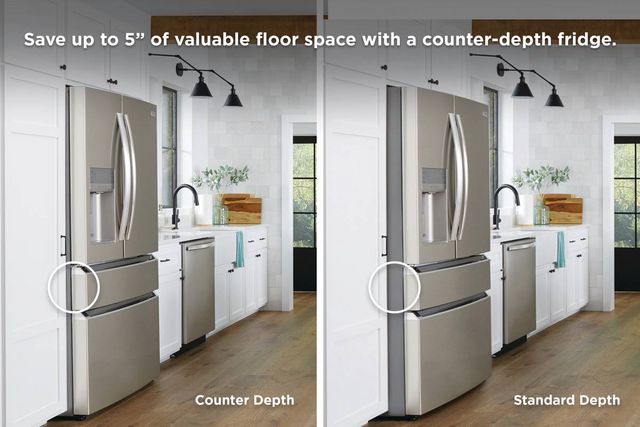
Three depth classes, three very different installations. Read down the column that matches your kitchen.
| Feature | Counter Depth | Standard Depth | Built-In or Panel Ready |
|---|---|---|---|
| Typical Depth Excluding Handles | 24 to 27 inches | 30 to 34 inches | 24 inches |
| Typical Depth Including Doors and Handles | 28 to 30 inches | 33 to 36 inches | 25 to 26 inches with panels |
| Common Widths | 30, 33, 36 inches | 30, 33, 36 inches | 30, 36, 42, 48 inches |
| Typical Height Range | 68 to 72 inches | 66 to 70 inches | 72 to 84 inches |
| Capacity Range in Cubic Feet | 15 to 26 | 20 to 28 | 18 to 30 per unit |
| Projection Past Countertop | 2 to 4 inches of door and handle | 4 to 6 inches of full cabinet | Flush face by design |
| Required Side and Rear Clearance | 1 to 2 inches rear, half inch each side | 2 inches rear, half inch each side | Front-vented, tight side gaps per spec |
| Best Kitchen Layout | Open-concept with an island | Closed kitchens with deep walkways | Full remodels with custom cabinetry |
| Typical Price Tier | Mid to upper mid | Entry to mid | Premium |
| Installation Complexity | Drop-in swap in most cases | Simplest swap | Cabinet work and trim kits required |
Read it by reader profile: counter depth suits open-concept and design-forward kitchens where sightlines and island clearance matter, standard depth suits high-volume families who want maximum cubic feet per dollar, and built-in or panel ready belongs in a full remodel where the cabinet opening is being built around the appliance.
How To Measure Your Kitchen for Counter Depth Refrigerator Dimensions
Twenty minutes with a tape measure prevents the worst outcome in appliance shopping, which is a delivery crew standing in your driveway with a unit that will not go in. Work through these in order.
- Measure the cutout width at the narrowest point, including any trim, baseboard, or cabinet molding that intrudes into the opening.
- Measure the height from the finished floor to the lowest obstruction above, whether that is a soffit, a cabinet bottom, or a light valance.
- Measure the depth from the back wall to the front edge of your countertop, then again to the front face of your cabinet doors.
- Measure the door swing arc from the hinge side, and confirm what sits in that path.
- Measure the walkway in front of the opening from the counter edge to the island or opposite cabinet.
Take the width and height in three places each. Older Valley homes with settled slabs and remodeled cabinet runs are rarely square, and a quarter inch of drift at the top of an opening is common. Always use the smallest number you get.
Then subtract clearance from those raw numbers instead of treating the raw opening as usable space. If your cutout measures 36 inches and the model needs a half inch on each side, your working width is 35 inches, not 36.
The Delivery Path Almost Nobody Measures
The opening is only the last three feet of the trip. Before you buy, walk the route the refrigerator has to travel and write down every pinch point:
- Front or garage doorway width: measured with the door removed if it is tight.
- Hallway width: and any 90-degree turn the box has to pivot through.
- Stair landings: railings, and low overhangs.
- Tile thresholds: and transition strips that change floor height.
- Whether the refrigerator doors and handles have to come off to clear a doorway: which most crews can do but you should plan for.
Also locate your utilities before you shop. Find the water line, the electrical outlet, and the shutoff valve, and note how far the water box or valve protrudes from the wall. A recessed water box set into the wall keeps that clearance clean, while a surface-mounted valve and a coiled supply line can eat a full inch of depth you thought you had.
The Five Numbers to Bring to the Showroom
Write these on your phone before you visit:
- Cutout width at the narrowest point.
- Height to the lowest obstruction.
- Depth from back wall to counter edge.
- Narrowest point on the delivery path.
- Walkway or island clearance in front of the opening.
French Door, Side-by-Side, or Column: How Style Changes the Footprint
Door configuration changes capacity, clearance, and how the unit lives in your kitchen. Same 36-inch opening, very different experiences.
French Door Counter Depth
The category leader. Expect 36 inches wide, 68 to 72 inches tall, 24 to 27 inches deep excluding handles, and 20 to 26 cubic feet. Two narrow upper doors mean each one swings a smaller arc than a single wide door, so French doors need less side clearance and work better in galley kitchens and next to a wall. Strong French door counter depth lineups come from LG, Samsung, Frigidaire Gallery, GE Profile, KitchenAid, Café, and Bosch.
Side-by-Side Counter Depth
Also typically 36 inches wide and 68 to 71 inches tall, with capacities that run from about 20 to 26 cubic feet. The tall narrow doors need the least swing room of any style, which is why they suit tight peninsulas. The trade-off is narrow shelves, since a shallow cabinet split down the middle leaves each side about 15 to 17 inches wide.
Four-Door and Flex Configurations
Four-door models add a convertible middle drawer that switches between refrigerator and freezer temperatures. Footprint matches a standard 36-inch French door, and the flex zone is the practical answer to lost cubic feet, because you can borrow space from whichever side needs it that week. Samsung, LG, and Café all build strong flex-zone units.
Bottom Freezer and Top Freezer Counter Depth
These run smaller. Widths of 24 to 33 inches and capacities of 10 to 19 cubic feet are typical, with heights from 66 to 70 inches. Bottom freezer models put fresh food at eye level and are popular in condos. Top freezer counter depth units are the least common and the most budget-friendly. Both usually use a single wide door, which needs the most side clearance of any configuration.
Built-In and Panel-Ready Columns
Column refrigeration is where a true flush inset happens. Units are typically 24 inches deep, 30 to 36 inches wide each, and 72 to 84 inches tall, and they are often installed as a refrigerator column plus a freezer column side by side. Thermador, JennAir, Frigidaire Professional, and Bosch all build in this space. Understand the commitment: panel-ready and flush inset installations require a planned cabinet opening with the right rough dimensions, trim kits, and often a dedicated circuit. This is remodel work, not a drop-in swap.
Counter Depth Refrigerator Dimensions: Pros and Cons Every Buyer Should Weigh
A shallower cabinet buys you a cleaner kitchen and costs you interior volume. Both halves of that trade are real, and which side matters more depends on how many people you feed and how open your floor plan is.
Pros
A clean, flush sightline
The cabinet stops in line with your countertop instead of interrupting the run, which is the single biggest visual upgrade in an open-concept kitchen.
More walkway and island clearance
Reclaiming four to six inches of projection makes a 42-inch aisle feel usable again and keeps open doors from blocking a passing cook.
Easier reach to the back
A shallower cavity means nothing hides behind the milk. Shelves are typically 4 to 6 inches shallower, so leftovers get found instead of forgotten.
Design and resale appeal
Counter depth reads as a designer choice to buyers and appraisers, and it is the expected look in newer Phoenix-area builds and remodeled kitchens.
Cons
Less capacity at the same width
A counter depth model usually gives up 4 to 6 cubic feet compared to a standard-depth unit in the same 36-inch opening.
A higher price for equal storage
Matching a standard-depth unit’s capacity in a counter depth body means moving up a tier, so expect to pay more for the same cubic feet.
Read more:
- Pros and Cons of Panel Ready Refrigerators
- Do You Need a Refrigerator Water Line for Ice and Water Dispensers?
Clearance, Ventilation, and Installation Requirements for a Flush Fit
Clearance is not padding. It is the airflow the sealed system needs and the swing space the doors need. Work from these numbers:
- Rear: roughly 1 to 2 inches between the back of the unit and the wall for condenser airflow.
- Sides: about a half inch on each side so the doors clear the cabinet faces and the unit can be walked in without scuffing.
- Top: about a half inch above the case, more if the manufacturer specifies it.
- Hinge against a wall: roughly 4 inches of side space so the door opens far enough past 90 degrees to pull crisper and deli drawers all the way out.
That last one causes more complaints than any other. A refrigerator can slide into an opening perfectly and still be frustrating to use every day if the door only opens to 90 degrees.
Why Airflow Is Not Optional
The compressor and condenser reject heat into the air around the unit. Box that air in and the compressor runs longer cycles at higher head pressure to hold the same interior temperature. Two things follow: the unit uses noticeably more electricity, and the compressor works harder for its whole service life. A refrigerator crammed into a tight alcove with no rear gap and a solid soffit above it is the classic setup for a short lifespan.
What the Arizona Climate Adds
Desert kitchens put extra load on refrigeration, and it shows up in a few predictable ways:
- Garage and pantry alcove placement: a garage that hits 110 degrees or higher in July pushes a standard refrigerator past its rated ambient range. If a second unit is going in the garage, it needs to be rated for high ambient temperatures.
- Dust on the condenser coils: Valley dust and monsoon grit blanket coils faster than in most climates. Vacuum the condenser area every six months rather than annually.
- Hard water: Phoenix-area water is mineral-heavy, which scales up ice makers and shortens water filter life. Plan on changing the filter on schedule and expect cloudier ice than you would see elsewhere.
When the Opening Is Too Shallow
Sometimes the wall is the problem, not the refrigerator. Three fixes, in order of effort:
- Recess the back wall between the studs to gain an inch or two, which often means relocating the water box.
- Add a filler panel or a shallow cabinet spacer above the unit so the projection reads as intentional rather than accidental.
- Trim the countertop overhang on the adjacent runs so the counter edge lines up with the refrigerator door.
Anything that involves opening a wall, moving a water line, or cutting stone belongs with a professional installer. So does the leveling step, which matters more than people expect. Here is the detail our installers get right on every delivery: level the unit side to side first, then set the front feet about a quarter inch higher than the rear so the doors swing closed under their own weight. Skip that and you get doors that drift open, gaskets that never fully seal, and an ice maker that frosts over.
Our team handles in-home measurement, delivery, and professional installation across the Phoenix metro, including doors-off entries and water line hookups, so the fit gets verified before anything is ordered.
Reading the Spec Sheet: The Counter Depth Dimensions Buyers Misread
Every manufacturer publishes a fit guide or dimension sheet for each model. It is the most useful page on the internet for your project, and almost nobody opens it. When you do, look for four separate depth figures and know what each one means.
- Depth without handles: case plus closed door. Compare this to your countertop depth.
- Depth with handles: adds an inch or two of handle projection. This is what you actually see sticking out.
- Depth with door open at 90 degrees: usually 44 to 50 inches from the back wall. This is the number that tells you whether the door clears your island.
- Overall depth including the rear water box: adds up to an inch. This is the number that decides whether the unit sits flush.
Appliance Dimensions Versus Cutout Dimensions
Appliance dimensions describe the box. Cutout or rough opening dimensions describe the hole it has to live in, and they are always larger. A 35.75-inch-wide refrigerator generally calls for a 36-inch to 36.5-inch cutout plus the rear air gap. Using the appliance number as your opening is the single most common cause of a fit failure, because it leaves zero room for clearance, out-of-square walls, or the trim you forgot to account for.
The Five Mistakes That Cause Returns
- Measuring to the wall instead of to the trim, baseboard, or cabinet molding that actually narrows the opening.
- Ignoring the countertop overhang, which sets the real flush line one to two inches ahead of the cabinet face.
- Forgetting the door swing radius against an island, so the door hits before it opens far enough to use the drawers.
- Assuming every 36-inch model shares the same depth, when two counter depth units can differ by three inches.
- Skipping the delivery path entirely and discovering the doorway problem on delivery day.
Counter depth is a category label, never a guarantee of fit. Pull the spec sheet for the exact model number you are considering, then have the numbers checked by someone who installs these every week. That one step turns a hopeful purchase into a confirmed one.
The Depth-to-Capacity Math That Shows What Shallow Really Costs
Most guides tell you that counter depth holds less. Here is how much less, and why. A 36-inch refrigerator has roughly 33 inches of usable interior width and about 60 inches of usable interior height once you subtract cabinet walls, insulation, and the sealed system. Multiply those and each single inch of interior depth is worth about 1,980 cubic inches, which is roughly 1.15 cubic feet. So when you move from a standard-depth box with 29 inches of interior depth to a counter depth box with 24 inches, you are giving up about five inches of depth, or somewhere near 5.5 cubic feet. That arithmetic explains almost every capacity gap on the sales floor, and it also explains how manufacturers claw the space back.
- Grow upward: a unit that stands 79 inches instead of 69 inches recovers several cubic feet without adding any depth, which is why the highest-capacity counter depth models are the tall ones.
- Grow wider: stepping from a 33-inch to a 36-inch opening adds roughly three inches of usable width, worth about 2 cubic feet at the same depth.
- Use a flex drawer: a convertible middle zone does not add volume, but it lets you move capacity between fresh food and frozen storage instead of running out of one while the other sits empty.
- Thin the walls: vacuum-insulated and thin-wall cabinet designs buy back half an inch to an inch of interior depth per side, which is why two units with identical exterior dimensions can differ by a cubic foot or more.
- Add a second box: a garage-rated refrigerator or an undercounter freezer handles bulk storage so the kitchen unit can stay shallow and stay flush.
Read more:
Counter Depth Refrigerators That Fit Beautifully in Valley Kitchens
Every model below is chosen for how it handles a specific opening, from a 32-inch condo alcove to a full 36-inch cutout. Widths, capacities, and configurations are listed so you can match a unit to the numbers you measured. One standard-depth model is included on purpose, as a fair comparison for anyone weighing capacity against projection.
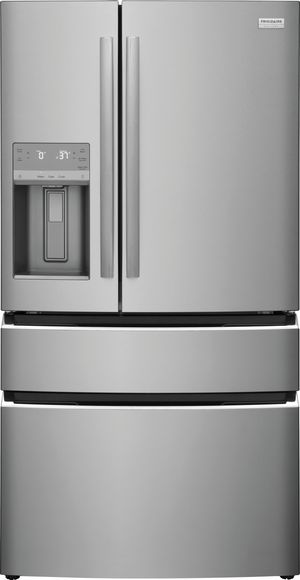
Frigidaire Gallery 36” 21.5 Cu. Ft. Smudge-Proof Stainless Steel Counter-Depth French Door Refrigerator
Shop Counter Depth Refrigerators
A 36-inch cutout is the most common refrigerator opening in Valley kitchens, and this model fills it without pushing past the countertop. The 21.5 cubic foot capacity sits right in the 21 to 23 cubic foot sweet spot that covers a family of three or four. French doors keep the side swing tight, so it works next to a wall or a peninsula where a single wide door would struggle. The smudge-proof stainless finish hides fingerprints on a door the whole household touches. Best for an open-concept kitchen replacing an older standard-depth unit.
Top Features
- 36-inch width class: Drops into the standard 36-inch cutout that most Phoenix-area kitchens already have.
- 21.5 cubic feet in a counter depth body: Mainstream capacity without the four to six inches of cabinet projection.
- French door swing: Two narrow upper doors need less side clearance than one wide door.
- Smudge-proof stainless steel: Resists fingerprints and streaks on a high-traffic door.
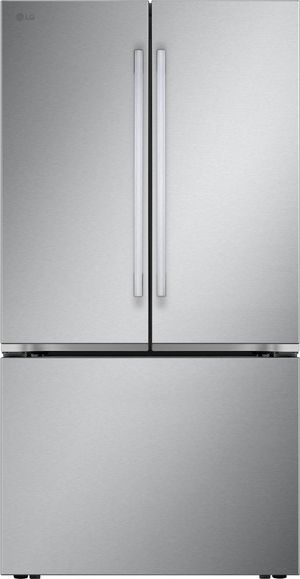
LG 36” 26.5 Cu. Ft. PrintProof Stainless Steel Smart Counter-Depth French Door Refrigerator
Shop Counter Depth Refrigerators
This is the counter depth exception worth knowing about. LG fits 26.5 cubic feet into the same 36-inch width and shallow projection, which is more capacity than plenty of standard-depth boxes hold. That volume comes from cabinet height rather than depth, exactly the trade described earlier, so measure floor to soffit before committing. PrintProof stainless keeps the doors looking clean, and smart controls let you check temperatures from your phone. Choose this one when the household is large, the opening is a full 36 inches, and the flush sightline still matters.
Top Features
- 26.5 cubic feet at counter depth: Top-of-category capacity without a deeper cabinet footprint.
- Tall cabinet design: Recovers interior volume by growing upward, so confirm your height to the lowest obstruction.
- PrintProof finish: Fingerprint-resistant stainless that stays presentable in a busy kitchen.
- Smart connectivity: Monitor and adjust temperatures remotely from a phone app.
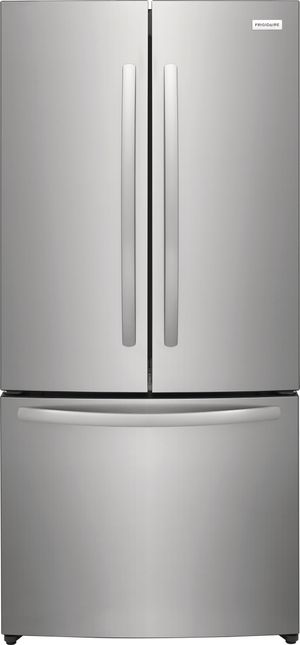
Frigidaire 32” 17.6 Cu. Ft. Brushed Steel Counter-Depth French Door Refrigerator
Shop Counter Depth Refrigerators
Narrow openings are where counter depth shopping gets difficult, and a 32-inch width solves alcoves that a 36-inch model simply will not enter. The 17.6 cubic foot capacity fits a couple, a condo, or a guest casita comfortably, roughly 17 to 18 grocery bags of storage. Because it is both narrow and shallow, it frees real walkway space in a galley kitchen where every inch of aisle counts. Brushed steel gives a warmer look than bright stainless. A strong pick for downtown condos and mid-century Phoenix kitchens.
Top Features
- 32-inch narrow width: Fits tight cabinet runs where 36-inch models do not have the clearance.
- 17.6 cubic feet: Right-sized capacity for one or two people or a smaller household.
- Counter depth footprint: Keeps the cabinet in line with the countertop in a narrow galley aisle.
- Brushed steel finish: A softer metallic look that pairs with warmer cabinet tones.
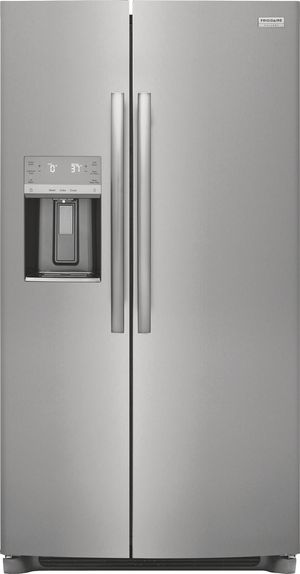
Frigidaire Gallery 36” 25.6 Cu. Ft. Smudge-Proof Stainless Steel Side-by-Side Refrigerator
Shop Side by Side Refrigerators
Here is the honest comparison point. This is a standard-depth side-by-side, not a counter depth model, so the cabinet projects several inches past a 25-inch countertop. What that projection buys is capacity: 25.6 cubic feet in the same 36-inch width, roughly four more than a comparable counter depth French door. Side-by-side doors are tall and narrow, so they still need very little swing room. Pick it when storage volume outranks a flush face and your walkway has the depth to spare.
Top Features
- 25.6 cubic feet of capacity: The extra volume you gain by accepting a deeper cabinet projection.
- Standard-depth footprint: Sits about four to six inches past the countertop, so check your aisle first.
- Side-by-side doors: Narrow door panels need the least swing clearance of any configuration.
- Smudge-proof stainless steel: Keeps fingerprints off a door that gets opened constantly.
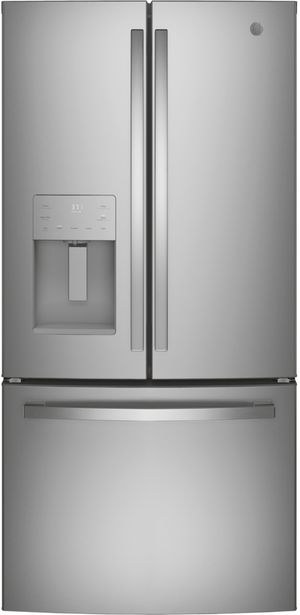
GE 33” 17.5 Cu. Ft. Fingerprint Resistant Stainless Steel Counter-Depth French Door Refrigerator
Shop Counter Depth Refrigerators
The 33-inch class is the middle ground nobody talks about, and it saves projects where the cutout came in at 34 inches and a 36-inch unit needs more room than the wall allows. You get 17.5 cubic feet in a shallow, narrow body with French doors that keep side clearance modest. The fingerprint-resistant stainless finish holds up in a kitchen with kids. Ideal for a townhome, a remodeled 1970s galley, or a secondary kitchen where the opening is fixed and the countertop line has to stay clean.
Top Features
- 33-inch width: Bridges the gap between narrow 30-inch openings and full 36-inch cutouts.
- 17.5 cubic feet: Practical capacity for smaller households in a shallow cabinet.
- French door configuration: Two upper doors keep the swing arc small in a tight aisle.
- Fingerprint resistant stainless: Wipes clean easily and resists visible smudging.
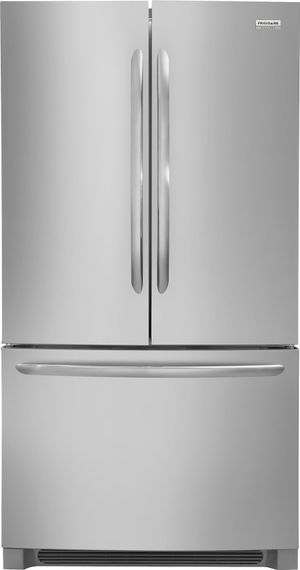
Frigidaire Gallery 22.4 Cu. Ft. Stainless Steel Counter-Depth French Door Refrigerator
Shop Counter Depth Refrigerators
At 22.4 cubic feet, this Gallery French door lands above the category average while keeping the shallow counter depth cabinet. That makes it a good fit for a family of four that wants full capacity and a countertop-flush look in the same purchase. Since the width is not printed in the model name, treat this as the perfect example of the spec-sheet rule covered earlier and confirm the case width and depth without handles for the exact model before ordering. Our team can pull those figures for you.
Top Features
- 22.4 cubic feet: Above-average capacity for a counter depth French door refrigerator.
- Counter depth cabinet: Keeps the box close to the countertop line for a cleaner sightline.
- French door layout: Wide, full-width fresh food shelves with a pull-out freezer drawer below.
- Stainless steel finish: Matches existing stainless ranges, dishwashers, and hoods.
Confident Choices Start With Accurate Counter Depth Refrigerator Dimensions
Counter depth runs 24 to 30 inches deep, 30 to 48 inches wide, and 66 to 80 inches tall, with 21 to 23 cubic feet covering most households. Add 1 to 2 inches behind the unit and about a half inch per side for clearance, then confirm the depth without handles, the door swing, and the delivery path on the exact model spec sheet. Those few numbers decide whether a refrigerator fits your kitchen or fits back on the truck.
Bring your measurements to Spencer’s TV & Appliance. Shop counter depth refrigerators online or visit one of our Valley showrooms to open the doors, pull the drawers, and see the real projection in person. Our local appliance specialists help verify your opening, our delivery crews handle doors-off entries and water line hookups, we haul away the old unit, and our service department is here in the Phoenix area long after the sale. That is what buying from an independent neighbor gets you instead of a warehouse and a call center.
Frequently Asked Questions about Counter Depth Refrigerator Dimensions
A counter depth refrigerator is about 24 to 27 inches deep excluding handles, and roughly 28 to 30 inches deep once doors and handles are counted. The category is named for standard 24-inch base cabinets topped by a countertop that lands near 25 to 26 inches from the wall.
Most counter depth refrigerators are 36 inches wide and 68 to 72 inches tall, with 30-inch and 33-inch widths available for narrow kitchens. Taller designs reach 79 to 80 inches to recover interior capacity, so always measure to the lowest obstruction above the opening.
Yes, the doors and handles on a counter depth refrigerator typically project two to four inches past the counter edge even though the cabinet body sits nearly flush. Only a recessed opening, a built-in unit, or a panel-ready column delivers a genuinely flush face.
Plan on 1 to 2 inches behind the unit for condenser airflow and about a half inch on each side and above for ventilation and door clearance. If the hinge side sits against a wall, allow roughly 4 inches so the door opens far enough to pull crisper drawers out.
Yes, a counter depth model usually drops into an existing standard-depth opening because it is shallower, not wider. The result is a gap behind the unit and less interior capacity, so verify the cutout width, the height to the lowest obstruction, and the water line position first.
Yes, a counter depth refrigerator in the 20 to 23 cubic foot range comfortably serves a family of four with a normal weekly grocery run. Households that buy in bulk or entertain often should look at 25 to 26 cubic foot counter depth models or add a garage-rated second unit.
Why Trust Spencers TV & Appliance?
Since 1973, Spencer’s TV & Appliance has grown to 11 locations throughout the Phoenix Metropolitan Area. The secret to our longevity is simple: personal service. Customer satisfaction has always been the focus of our business, and throughout the years, we have been able to work hard with our suppliers to bring you the best prices. After all, getting customers the best price and personal attention is how we compete with big-box stores, day in and day out.
Not only do we offer top-rated appliances, name-brand electronics, and the best mattresses on the market but we also provide water treatment solutions and perform kitchen design services. Stop by your nearest Spencer’s and see what you’re missing!
Shop Refrigerators at Spencers
At Spencers TV & Appliance, we provide high-quality, name-brand products at great prices. Your friends in the business are always happy to help you choose the best mattress for lower back and leg pain. Call us, or better yet, stop by at one of our locations in the Phoenix, Scottsdale, and Glendale regions. Visit us today!