

It is 2 a.m. and one of you is curled on your side with a shoulder pressed into a surface that gives back nothing, a pillow shoved under one hip to fake some cushioning. The other is flat on their back, sinking in, kicking the covers off because the bed has been running warm since eleven. Every time one person rolls over, the other surfaces from a dream. The bed underneath both of you was a compromise neither of you actually picked, which is exactly how the search for the best mattress for couples usually starts.
Test Two Sleep Styles on One Bed
Our sleep specialists help couples find the firmness window that works for both of you, then let you try split firmness and adjustable base setups side by side before you commit. Shop mattresses with local delivery, setup, and old mattress removal.
Here is the part nobody tells you: the fix is rarely meeting in the middle. Our team has spent years watching couples solve this, and the solution usually comes from naming the real mismatch first. This guide covers how to diagnose what is actually costing you sleep, how to find a shared firmness range, the five performance features that matter when two bodies share one surface, how mattress types compare, when to split the bed entirely, what size you truly need, and how to test a bed together before any money changes hands.
Key Takeaways
- Name the mismatch first: Most couples argue about firmness when the real conflict is position, body weight, temperature, movement, or schedule. Rank those five before you shop.
- Medium-firm is the shared starting point: A 6 to 6.5 on the 1 to 10 firmness scale supports back and stomach sleepers while still letting a side sleeper’s shoulder and hip sink in.
- A 50-pound gap changes everything: Once partners differ by roughly 50 pounds or more, one firmness rarely satisfies both, and split firmness or a Split King becomes the honest answer.
- Size can beat firmness: A Queen gives each person about 30 inches of width. A King gives each person 38 inches, the same as a Twin XL, and extra width solves more arguments than people expect.
What Different Sleep Styles Actually Mean for Couples Sharing One Bed

Couples walk in asking for something firmer or something softer. The real problem is almost always one of five specific mismatches, and naming yours changes the entire shopping process.
Sleep Position
Side, back, stomach, and combination sleepers each need a different balance of contouring and support. A bed tuned for a stomach sleeper actively works against a side sleeper’s shoulder, and the reverse is equally true.
Body Weight
This is the gap most buying guides skip. Firmness is a felt experience, not a fixed number. A 130-pound sleeper and a 220-pound sleeper lying on the identical medium-firm bed are experiencing two different beds, because a heavier body compresses the comfort layers further and reaches the support core sooner. Once the gap between partners hits roughly 50 pounds, a single firmness rarely satisfies both people.
Temperature
Heat retention varies enormously by material, and one hot sleeper can make a shared bed unusable. In Phoenix-area homes where summer overnight lows sit in the 80s and the thermostat is its own negotiation, a dense all-foam bed turns a mild difference into a nightly problem.
Movement and Restlessness
Motion transfer is how much of one person’s movement travels across the bed to the other. High motion transfer means a partner who shifts at 3 a.m. pulls you out of deep sleep without either of you registering why.
Schedule
An early riser and a night owl get in and out of bed at opposite hours. For that couple, motion isolation and edge support matter more than the firmness number ever will.
Before you shop, rank those five from most disruptive to least. Whatever sits at the top dictates the decision, and it points you toward the best mattress for couples in your specific situation rather than a generic recommendation.
Read more:
Mattress Firmness for Couples: Finding the Shared Comfort Window
Firmness runs on a 1 to 10 scale. Soft lands around 3 to 4, medium around 5, medium-firm around 6 to 7, and firm at 8 and above. Most beds marketed as universal comfort sit between 5 and 7 for a reason.
Here is the direct answer other guides bury: medium-firm, roughly 6 to 6.5, is the most reliable starting point for two people. It holds a back or stomach sleeper’s hips in line while still allowing enough shoulder and hip sink for a side sleeper.
Side Sleepers
Target 4 to 6. The shoulder and hip need to sink so the spine stays neutral instead of bowing upward at the waist. Too firm and the shoulder takes the entire body’s weight on one joint.
Back Sleepers
Target 5 to 7. You need enough contouring to fill the lumbar curve without letting the hips drop below the shoulders.
Stomach Sleepers
Target 6 to 8. A softer surface lets the hips sink first, which arches the lower back all night. Firmer is genuinely better here.
Combination Sleepers
Target 5 to 7 with a responsive surface. Changing positions matters more than any single number, so prioritize a bed that rebounds quickly rather than one that holds an impression.
Now apply that to real pairings:
- Side plus back sleeper: land at 5.5 to 6.5. The back sleeper should flex toward the softer end, since a slightly softer bed costs them less than a firm one costs the side sleeper.
- Side plus stomach sleeper: the widest gap of the three. Land at 6 with zoned support, or accept that this pairing is the strongest candidate for split firmness.
- Back plus stomach sleeper: land at 6.5 to 7. This is the easiest pairing to solve with one surface.
Rather than hunting for one perfect number, find the overlap window where both sets of needs intersect, then pick the bed whose construction handles the edges of that window best. Zoned support does exactly that, running softer through the shoulder area and firmer through the lumbar region so one surface can serve two positions.
Two adjustments before you finalize. Body weight shifts the recommendation half a step to a full step in either direction, and a lighter partner often needs to go one step softer than any chart suggests. And firmness labels are not standardized between brands, so a medium-firm from one manufacturer can feel like another brand’s medium. Trust how a bed feels under your body, not the word on the tag.
Five Mattress Features That Matter Most When Two People Share a Bed
Every serious review tests on these five. Covering them is table stakes. What follows are the decision cues that get left out.
Motion Isolation
Memory foam and individually wrapped pocketed coils absorb movement locally. Continuous and interconnected coil systems pass it along the whole surface. Test it directly: have your partner lie still while you roll over and get up, then swap. Whoever stayed still reports what they felt. If your top mismatch is a restless partner or a mismatched schedule, this feature outranks firmness.
Edge Support
A reinforced perimeter, whether foam encasement or higher-gauge edge coils, expands how much of the mattress you can actually sleep on. That matters most in a Queen where two people are already tight. It also decides whether sitting on the side of the bed to put shoes on feels stable or feels like sliding off.
Temperature Regulation
You will see gel, graphite, and copper infusions, phase change material covers, open-cell and perforated foams, latex, and coil airflow on spec sheets. The practical hierarchy holds up: coil-based hybrids and latex sleep cooler than dense all-foam beds, because air moves through a coil unit and does not move through a solid block of foam. In a Phoenix summer, that difference is the whole ballgame for a hot sleeper.
Pressure Relief and Spinal Alignment
Contouring and support pull against each other. Get the balance wrong and it announces itself, as shoulder pain for the side sleeper or a low-back ache for the back sleeper, usually within the first two weeks.
Responsiveness
Responsiveness is how fast the surface springs back. Slow-recovery memory foam creates that stuck-in-the-bed feeling, which frustrates combination sleepers and anyone who values a little bounce. Latex and coils recover much faster.
Match these five back to the mismatch you ranked first. If temperature topped your list, a hybrid or latex build with coil airflow does more for you than another half-step of firmness. Look for pocketed coils, coil gauge, foam density, Talalay or Dunlop latex, and certifications like CertiPUR-US and OEKO-TEX on the label as supporting evidence.
Mattress Types Compared for Couples With Different Sleep Styles
| Mattress Type | Typical Firmness Range | Motion Isolation | Cooling | Edge Support | Best Sleep Style Pairing | Typical Price Range |
|---|---|---|---|---|---|---|
| Memory Foam | 3 to 7 | Excellent | Fair | Limited | Two light sleepers on opposite schedules | 600 to 2,000 dollars |
| Latex | 5 to 8 | Good | Good | Good | Combination sleepers who want bounce and cooling | 1,200 to 3,500 dollars |
| Innerspring | 5 to 8 | Limited | Good | Good | Two back or stomach sleepers on a budget | 400 to 1,500 dollars |
| Hybrid | 4 to 8 | Good | Good | Excellent | Side plus back sleepers needing contouring with support | 900 to 3,000 dollars |
| Airbed with Adjustable Firmness | Adjustable 2 to 9 | Good | Fair | Good | Partners with a large weight or firmness gap | 1,500 to 5,000 dollars |
Hybrids end up being the most common answer for couples, and the reason is structural. Pocketed coils deliver support, edge reinforcement, and airflow underneath, while the comfort layer above handles contouring and pressure relief. You get two jobs done by two different materials instead of asking one material to do both.
Airbeds with independently adjustable chambers are the only type that gives each partner a genuinely separate firmness inside one mattress. That capability is why they command the price they do.
Treat this table as a starting filter rather than a verdict. Performance varies widely between models inside every one of these categories.
When One Firmness Will Not Work: Split Firmness, Split King, and Adjustable Bases
Some couples have passed the point where compromise is the answer. You are probably there if any of these describe you: a weight gap around 50 pounds or more, a committed side sleeper paired with a committed stomach sleeper, chronic pain concentrated on one side of the bed, or one partner who needs the head raised for snoring or reflux.
Split Firmness Mattresses
One mattress built with two different firmness levels across its width, sharing a single cover and one continuous sleep surface with no visible seam. These are usually a special order, and the split is typically offered only in King and California King widths.
Split King
Two Twin XL mattresses, each 38 inches wide by 80 inches long, set side by side to match a standard King footprint. This is the most flexible option available, because each partner can have a completely different mattress, a different firmness, and an independent adjustable base. Two honest drawbacks come with it: the center gap, and the need for Twin XL sheets or a purpose-made split King set plus a bridging pad if the gap bothers you.
Dual-Chamber Airbeds
Each side inflates to its own firmness setting and can be re-tuned as bodies and needs change over the years. For couples whose comfort preferences keep moving, that adjustability is the point.
Adjustable Bases
A split King base lets one partner raise the head or use a zero-gravity position without moving the other person an inch. When you shop bases, ask about independent head and foot articulation, preset positions including anti-snore, massage, under-bed lighting, and weight capacity.
There is also a lower-cost partial fix that most guides ignore: a firmness-adjusting topper applied to one side only. Be realistic about what it does. A topper can soften a side that is too firm. It cannot add support to a side that is too soft, and it creates a noticeable height step across the middle of the bed.
Any split setup needs a compatible foundation or base, and that decision has to happen at the same time as the mattress rather than afterward.
Best Mattress for Couples: The Pros and Cons of a Split Firmness Setup
Splitting the bed ends the firmness argument permanently and hands each partner an independent sleep surface. It also costs more money, complicates bedding, and changes the feeling of sharing one bed. Both halves of that are true.
Pros
Firmness matched to each body
Each partner gets a surface tuned to their actual sleep position and body weight instead of a number that half-works for both.
Motion transfer nearly disappears
Two separate pieces on two separate bases means one person getting up at 5 a.m. registers as almost nothing on the other side.
Independent positioning
One partner can raise the head for snoring, reflux, or reading while the other stays flat, which a single base cannot do.
Replace or re-firm one side later
When one person’s needs change, you address that side rather than buying an entire new bed.
You still share a bed
This solves the problem without anyone moving to the guest room, which is the outcome most couples actually want.
Cons
Higher total cost
Two mattresses plus a split base plus split bedding runs meaningfully above a single King setup.
The center gap and bedding logistics
Two pieces meet in the middle, and you will need Twin XL or split King sheets plus a bridging pad if the seam bothers you.
Read more:
- Best King Mattresses for Couples, Back Pain, & Hot Sleepers
- Full Size Mattress vs Queen: Prices, Comforts, & Sizes Compared
Mattress Sizes for Couples: How Much Sleeping Space Two People Really Need
Start with the numbers. A Queen is 60 by 80 inches. A King is 76 by 80 inches. A California King is 72 by 84 inches. A Split King is two Twin XL pieces at 38 by 80 inches each.
Now translate width into personal space, because this is the insight that changes minds. A Queen gives each partner about 30 inches, roughly the width of a crib mattress. A King gives each partner 38 inches, exactly the width of a Twin XL. Two adults sharing a Queen are each sleeping on a crib-width strip.
Sometimes the right move is more width rather than different firmness. Size up when any of these apply:
- One or both of you moves a lot during the night.
- There is a large height or weight difference between partners.
- One of you is a combination sleeper who changes position several times a night.
- Kids or a dog join the bed with any regularity.
California King deserves a specific mention for taller sleepers. It trades 4 inches of width for 4 inches of length, so a partner over roughly 6 feet 2 inches usually prefers it even though it is technically narrower than a King.
Plan the room before you commit. Leave 24 to 30 inches of clearance on each walkable side, and measure your doorways, hallway turns, and stairwell. A one-piece King has failed to make the turn into plenty of second-floor bedrooms, which is a delivery problem a Split King solves outright since each piece is only 38 inches wide.
One bedding note that surprises people: Split King needs Twin XL sheets or a purpose-made split King set, and California King sheets are not interchangeable with standard King.
How to Test a Mattress Together Before You Buy
Nearly every article ranking for this topic is an online roundup that never explains how two people should evaluate a bed in person. That is the biggest gap in the category, so here is the actual protocol.
- Lie down together, not one at a time. The bed behaves differently under two bodies.
- Get into the position you genuinely sleep in, with a pillow at the loft you actually use.
- Stay there 10 to 15 minutes per position. Thirty seconds tells you nothing except whether the cover feels nice.
- Run the partner-disturbance test. One person lies still while the other rolls over, gets up, and sits down hard on the edge. The still partner reports what they felt.
- Run the alignment check. While you lie on your side, have your partner look at your spine from the side. The line from neck to hips should stay roughly straight, with no sag at the hip and no gap at the waist.
Pillow loft is the hidden variable in all of this. The wrong pillow makes a correctly firm mattress feel wrong, and side sleepers need noticeably more loft than back sleepers to keep the neck in line.
Before you buy, get answers on the length of the sleep trial or comfort guarantee, whether a comfort exchange exists and what it costs, warranty terms and what voids them, delivery and setup, and old mattress removal.
Here is the detail that voids more warranties than any other: most manufacturers require a supportive foundation with a center support rail, and on a Queen or King that rail generally needs its own legs to the floor. A pretty bed frame without center support can invalidate the warranty on a mattress that sags eighteen months later. Confirm the foundation requirement in writing before delivery day.
Give any new bed a 30-day adjustment period before you judge it. Your body has adapted to whatever you slept on for the last several years and needs time to recalibrate.
This is also where buying locally separates from buying online. At Spencer’s, both partners can lie on split firmness configurations and adjustable bases in the same visit, with a sleep specialist walking you through the differences in real time.
How an Adjustable Base Changes the Firmness You Feel
Almost every mattress guide treats firmness as a fixed property of the bed, which stops being true the moment the surface stops being flat. Raise the head 30 degrees and your body weight redistributes toward the hips and lower back, so the same mattress reads noticeably firmer under the shoulders and softer through the lumbar region. Lift the knees and the pelvis rotates, taking pressure off the lower back entirely. For couples, this is the most underused tool available, because a split base lets each partner tune the felt firmness of an identical mattress in opposite directions without buying two different beds.
Practical ways couples use base positioning to close a firmness gap:
- A side sleeper on a slightly too-firm bed can raise the knees a few degrees to reduce hip pressure and open the space at the waist.
- A back sleeper on a slightly too-soft bed can raise the head 10 to 15 degrees to shift load off the lumbar area and reduce the sinking feeling.
- The partner who snores can use an anti-snore preset, typically 7 to 12 degrees of head lift, without the other person feeling any change.
- A partner with reflux benefits from a sustained head-up position that a wedge pillow cannot hold through the night.
- Zero-gravity positioning, with knees slightly above the heart, distributes weight most evenly and often makes a firm mattress feel a full step softer.
Read more:
- Choose Your Mattress Wisely: Sleep & Mattress Guide
- Hybrid Mattress vs Memory Foam: Price vs Features
Shop the Best Mattress for Couples at Spencer’s TV & Appliance
Once you know which mismatch is costing you sleep, the shortlist gets short fast. The three beds below cover the most common couple scenarios we see, from a partner who runs hot to a pairing with a real weight difference. All three are available to lie on together in our showrooms.
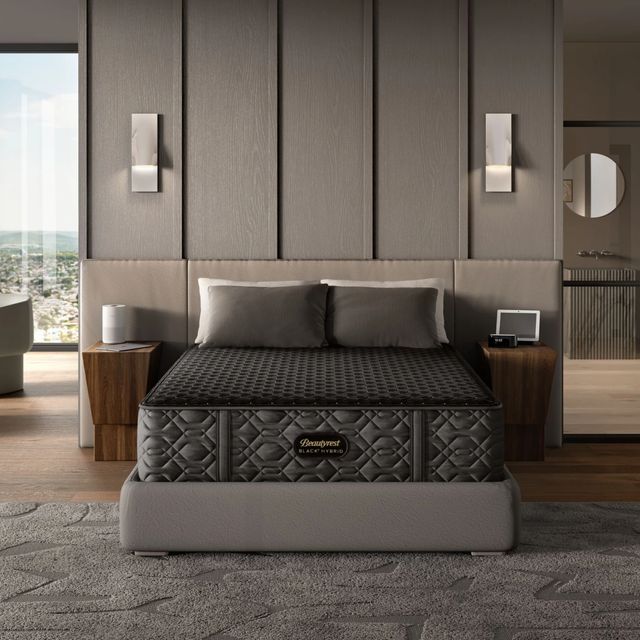
Beautyrest Black Series 3 Hybrid 14.5” Soft Smooth Top Queen Mattress
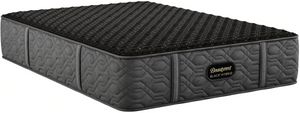
This is the pick when one partner sleeps on their side and runs warm at night. The hybrid build pairs pocketed coils with a soft smooth top, so the shoulder and hip get real contouring while the coil unit moves air underneath instead of trapping it the way a dense foam block does. At 14.5 inches of profile, there is enough comfort layer above the coils to serve a side sleeper without leaving a back sleeper unsupported. The individually wrapped coils also isolate movement well, which matters when one of you is up before dawn.
Top Features
- Hybrid coil and foam construction: Pocketed coils handle support and airflow while the comfort layer manages pressure relief.
- Soft smooth top comfort layer: Gives the shoulder and hip room to sink so a side sleeper’s spine stays neutral.
- 14.5-inch profile: Deep enough to serve two positions on one surface without bottoming out.
- Individually wrapped coils: Absorb movement locally so a restless partner stays a local problem.
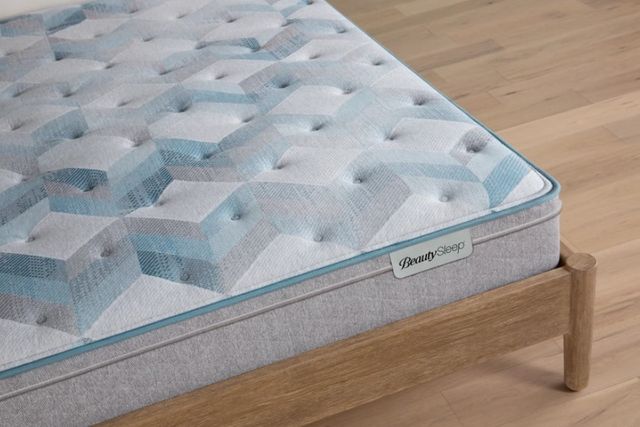
BeautySleep Serene Morning 12.25” Wrapped Coil Medium Euro Top Queen Mattress
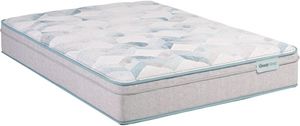
Medium is the shared comfort window most couples are looking for, and this bed sits right in it. The Euro top adds a cushioned upper layer stitched flush to the edge, which extends usable surface toward the perimeter rather than stopping short of it. That extra usable width matters in a Queen where two people are already close. Wrapped coils keep motion local, so the early riser and the night owl stop waking each other. At a 12.25-inch profile it fits standard sheets without a struggle, which is a small daily win.
Top Features
- Medium firmness: Lands in the shared window that works for side plus back sleeper pairings.
- Euro top design: Stitched flush to the edge to widen the usable sleeping surface.
- Wrapped coil system: Keeps one partner’s movement from crossing the bed.
- 12.25-inch profile: Works with standard fitted sheets and most existing foundations.
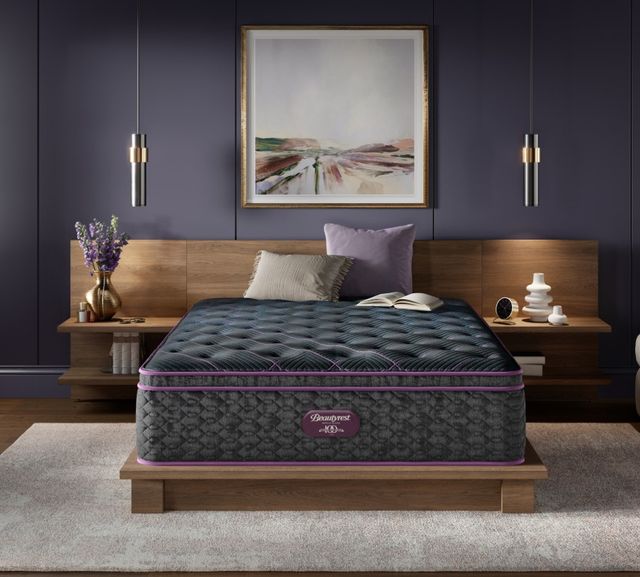
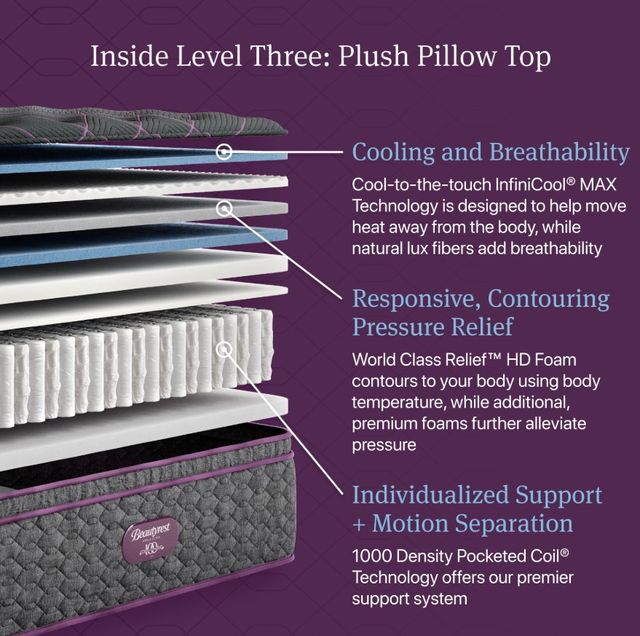
Beautyrest World Class Level Three 16” Pocketed Coil Plush Pillow Top Queen Mattress
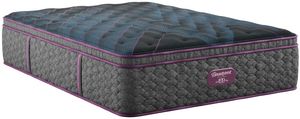
When partners differ significantly in body weight, depth is what saves you. At 16 inches with a plush pillow top over a pocketed coil unit, this bed gives a heavier sleeper enough material to compress through before reaching the support core, while a lighter partner still gets genuine contouring at the surface. That is the construction difference that keeps two very different bodies from experiencing two very different beds. The plush top suits side sleepers, and the pocketed coils handle both support and motion isolation underneath.
Top Features
- 16-inch profile: Extra depth keeps a heavier sleeper from compressing straight through to the support core.
- Plush pillow top: Delivers the surface softness a dedicated side sleeper needs.
- Pocketed coil support: Independent coils respond to each body separately across the width of the bed.
- Weight-difference friendly: Built for the 50-pound-gap scenario that defeats thinner mattresses.
Choosing the Best Mattress for Couples Who Sleep Differently
Figure out which of the five mismatches is actually costing you sleep, start from a medium-firm shared window and adjust for position and body weight, and move to split firmness, a Split King, or an adjustable base when one surface genuinely cannot serve two people. That order of operations saves couples from buying the wrong bed twice.
Come test it together. Visit Spencer’s TV & Appliance to lie on mattresses side by side with a sleep specialist, or browse the mattress collection online. Our specialists walk both partners through firmness and position in the same visit, you can try split firmness and adjustable base setups in person before committing, and delivery includes setup and old mattress removal. When something needs attention two years from now, you are calling a store in the Valley rather than a call center.
Frequently Asked Questions About the Best Mattress for Couples
Medium-firm, roughly 6 to 6.5 on the 1 to 10 scale, is the most reliable firmness for couples with different sleep positions. It supports back and stomach sleepers while still allowing enough shoulder and hip sink for a side sleeper.
Yes, a side sleeper and a back sleeper can share one mattress comfortably at around 5.5 to 6.5 firmness. Zoned support helps considerably, since it runs softer at the shoulders and firmer through the lumbar region to serve both positions on one surface.
A Split King is better when partners need genuinely different firmness levels or independent adjustable base positions. A standard King is the better choice for couples who agree on firmness, since it avoids the center gap and works with ordinary King bedding.
Memory foam offers the best motion isolation, with hybrids using individually wrapped pocketed coils close behind. Traditional innerspring beds with interconnected coils transfer the most movement across the surface.
Couples with a weight gap of roughly 50 pounds or more do best with a thicker hybrid, typically 14 inches or more, or with a split firmness setup. Added depth gives a heavier sleeper material to compress through before reaching the support core, so both partners feel a similar bed.
A topper can soften one side of a bed that is too firm, but it cannot add support to a side that is too soft. It also creates a visible height step across the middle of the mattress, so treat it as a partial fix rather than a solution.
Why Trust Spencers TV & Appliance?
Since 1973, Spencer’s TV & Appliance has grown to 11 locations throughout the Phoenix Metropolitan Area. The secret to our longevity is simple: personal service. Customer satisfaction has always been the focus of our business, and throughout the years, we have been able to work hard with our suppliers to bring you the best prices. After all, getting customers the best price and personal attention is how we compete with big-box stores, day in and day out.
Not only do we offer top-rated appliances, name-brand electronics, and the best mattresses on the market but we also provide water treatment solutions and perform kitchen design services. Stop by your nearest Spencer’s and see what you’re missing!
Shop Mattresses at Spencers
At Spencers TV & Appliance, we provide high-quality, name-brand products at great prices. Your friends in the business are always happy to help you choose the best mattress for lower back and leg pain. Call us, or better yet, stop by at one of our locations in the Phoenix, Scottsdale, and Glendale regions. Visit us today!