
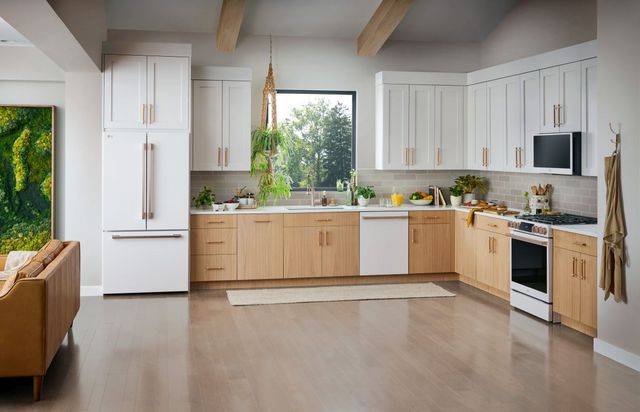
The first sign is a dark stain spreading across the tile in front of the refrigerator at six in the morning. Inside the freezer, a month of batch cooking has gone soft, the ice cream is soup, and everything on the top shelf goes into a trash bag before breakfast. The technician arrives two days later, pulls the unit out, and quotes a sealed system repair worth more than half the price of a new refrigerator on a machine that is five years old. What stings most is that this purchase was researched carefully the first time, which is exactly why the most reliable refrigerator brand question deserves a better answer than a star rating on a product page.
The encouraging part is that refrigerator reliability is measurable, and the patterns hold steady enough to shop by. At Spencers TV and Appliance, our service department works on the same units our sales floor sells, so the feedback loop between what gets sold and what comes back for repair is short and honest. This guide covers how reliability is actually measured, the four brands that consistently earn the reputation, how configuration and features change failure rates more than the badge does, what warranties really cover, the maintenance that adds years to any unit, and how to turn all of it into a purchase.
Buy a Refrigerator You Will Not Be Replacing in Five Years
Spencers TV and Appliance has sold and serviced appliances across the Valley since 1973, which means our technicians see which refrigerators come back and which ones never do. Shop French door, counter depth, and built-in refrigerators with delivery, water line hookup, and haul-away handled locally.
Key Takeaways
- Reliability and longevity are different things: Reliability is how often a unit needs service, longevity is how many years it runs, and a modern refrigerator typically lasts 10 to 15 years.
- Features drive failure rates: Ice makers, through-the-door dispensers, and touchscreen controls account for a large share of service calls, so simpler configurations generally need fewer repairs.
- Brand is a starting point, not a guarantee: Reliability varies by product line within every brand, which is why the specific model and its configuration matter as much as the name.
- Local service access changes ownership more than a rating point: Parts availability and whether a technician nearby is authorized for the brand affect your experience more than a small difference in survey scores.
How Refrigerator Reliability Is Actually Measured

Four kinds of data get quoted in refrigerator reliability discussions, and each one measures something slightly different.
- Retailer and repair company service data, which tracks how many units required a service call within a set window
- Consumer survey data from testing organizations such as Consumer Reports and J.D. Power, which reports what owners say happened
- Warranty claim frequency, which manufacturers track internally and rarely publish
- Owner reviews on retail sites, which are free and abundant and the least reliable of the four
The metric that matters most is service rate: the percentage of units needing a repair within the first year and within the first five years. A lower percentage is better, and the five-year figure is the more useful of the two because early failures often trace to shipping and installation rather than design.
Read the Sources Honestly
Every source has a built-in bias worth naming:
- Survey data reflects owner perception and memory, and owners of expensive units often report problems they would have shrugged off on a cheap one.
- Repair company data over-represents units that broke, because nobody calls a technician about a refrigerator that works.
- Retailer service data is the closest to reality but only covers what that retailer sold.
- Review data skews to extremes, since delighted and furious customers write reviews and everyone else does not.
Anytime you see a precise number, check who published it and in what year. Reliability rankings shift, model platforms change, and a 2019 figure describes a refrigerator you can no longer buy. That is also why the specific statistics in this guide are kept general rather than presented as universal fact.
Reliability, Longevity and Repairability
These are three separate questions. Reliability asks how often it needs a technician. Longevity asks how many years it runs before replacement makes more sense than repair, and for a modern refrigerator that is generally 10 to 15 years. Repairability asks what happens when it does break: whether parts are available, what the common parts cost, and how many technicians in your area are certified to work on that brand.
A brand can score well on one and poorly on another. A premium built-in unit may run 20 years but cost a fortune to service. A basic top freezer may need almost nothing for 15 years and be cheaper to replace than repair when it finally quits.
Read more:
The Best Refrigerator Brands to Keep You & Your Food Happy
Why Is My Refrigerator Making Noise? 5 Sounds & What They Mean
The Counterintuitive Part
Here is the finding that reframes the whole shopping decision: within nearly every brand, the most feature-rich refrigerators show higher service rates than the simplest ones. A basic top freezer has a compressor, a fan, a defrost system, and a thermostat. A four-door flex model with a through-the-door dispenser, dual ice makers, a touchscreen, and a convertible drawer has all of that plus a dozen more components that can fail.
That means the reliability question is not only which brand, but which configuration within that brand. Buying a simpler model from a mid-tier brand often produces fewer service calls than buying the flagship from the brand that ranks highest overall.
The Most Reliable Refrigerator Brands to Consider
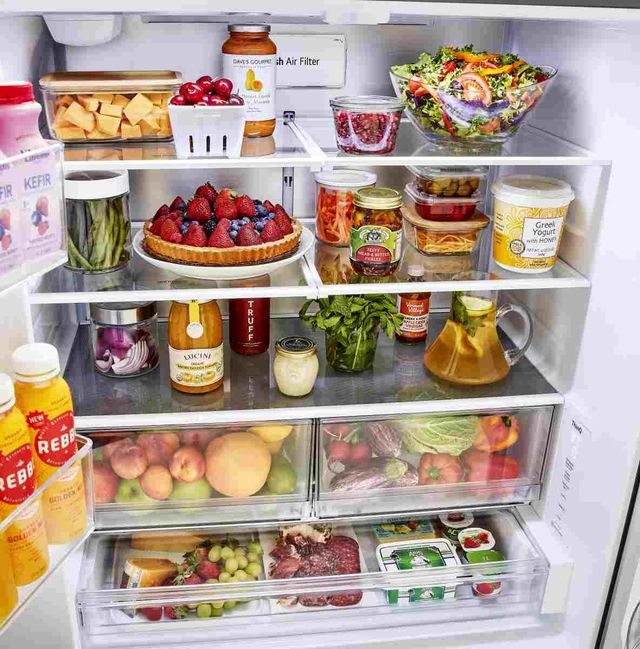
Four names come up repeatedly in service data, technician recommendations, and survey results, and each one earns it in a different part of the market.
1. Whirlpool
Whirlpool is the default answer for a reason. The company builds enormous volumes on shared platforms, which means parts are everywhere, common repairs are inexpensive, and virtually every appliance technician in Arizona has worked on one. Whirlpool’s strength is straightforward, mid-priced French door and side by side units without exotic features, which is exactly the profile that produces low service rates.
Whirlpool also builds KitchenAid, Maytag, and Amana, and those brands share platforms and parts. That family relationship is genuinely useful information, because it means a Maytag part shortage is unusual and a KitchenAid refrigerator is often a dressed-up Whirlpool underneath with a better warranty.
- Best for: Buyers who want a dependable mid-priced refrigerator and cheap, fast repairs when something does go wrong.
- Watch for: The feature-loaded models at the top of the line lose some of the simplicity advantage.
2. LG
LG earns its place on technology rather than simplicity. The company’s linear inverter compressor runs at variable speed instead of cycling on and off, which is quieter, more efficient, and less mechanically stressful over time. LG backs it with a long limited parts warranty on the compressor, typically ten years, which tells you what the manufacturer expects from it.
LG is strongest in French door and counter depth French door refrigerators, where the brand’s shelving, drawer feel, and interior lighting are genuinely better than most of the market. LG STUDIO is the design-forward step-up line, aimed at kitchens where the refrigerator is part of the room rather than an appliance in the corner.
- Best for: Buyers who want French door or counter depth styling with strong efficiency and a compressor warranty behind it.
- Watch for: Ice maker and dispenser assemblies are the most common LG service item, as they are for nearly every brand.
3. Bosch
Bosch approaches refrigeration the way European brands generally do, with fewer moving parts, tighter tolerances, and a design bias toward counter depth. The brand’s counter depth French door and bottom freezer units are consistently well regarded, and dual evaporator cooling, which keeps refrigerator and freezer air separate, prevents the odor transfer and humidity problems that single-evaporator designs can have.
The trade is price and configuration range. Bosch does not build a cheap refrigerator, and it does not build many enormous ones. What it builds tends to keep working.
- Best for: Counter depth kitchens, remodels where cabinet-flush styling matters, and buyers willing to pay upfront for fewer problems.
- Watch for: A smaller service network than Whirlpool, so confirm local technician coverage before buying.
4. GE and GE Profile
GE is the other high-volume American name with parts on every truck. The mainline GE refrigerators are conservative, well built, and easy to service, while GE Profile steps up the finishes, controls, and features. Café, the design-focused line with customizable hardware, sits above that and shares much of the same engineering, which is why a Café refrigerator generally behaves like a GE Profile with better trim.
GE’s advantage in the Phoenix metro is practical rather than technical. Parts availability and technician familiarity are both excellent, which shortens the time between a failure and a working refrigerator.
- Best for: Buyers who want mainstream reliability with a clear upgrade path from basic to designer trim.
- Watch for: As with any brand, the top-of-line models with dispensers and touchscreens carry more failure points than the basic ones.
The Premium and Specialty Names
Sub-Zero, Thermador, and U-Line sit in a different category. These are built-in and column refrigerators engineered for 20-plus year service lives, with serviceable components and dedicated technician networks. They are genuinely durable, but they are also expensive to buy and expensive to fix, and they only make sense in kitchens designed around them. U-Line in particular owns the undercounter and specialty refrigeration category, where the alternative is usually a compact unit that lasts three years.
About the Brands to Avoid Question
The honest version of that answer is not a blacklist. Service data across the industry points at complexity rather than nameplates: units with through-the-door ice and water, dual ice makers, flex-temperature drawers, and touchscreens generate more service calls than simpler units from the same manufacturer. Reliability also varies line to line inside every brand on this page. A brand ranking narrows the field; the specific model and its feature set finish the job.
How Refrigerator Style Affects Reliability
Configuration is the variable most shoppers underweight, and it may matter more than which of the four brands above you choose.
Failure Patterns by Configuration
- Top freezer: The simplest design sold, with the fewest components and the lowest service rates. Often outlasts everything else in the store.
- Bottom freezer: Slightly more complex, with a drawer mechanism and usually an interior ice maker, but still simple overall.
- Side by side: Almost always includes a through-the-door dispenser, which adds the single most service-prone assembly in refrigeration.
- French door: Two doors, a freezer drawer, and frequently an in-door ice maker and dispenser. More components, more service calls, but also the most popular configuration by a wide margin.
- Four door flex: Adds a convertible temperature zone with its own damper and control logic.
- Built-in and column: Most complex and most expensive to service, but engineered and priced for a long life.
The Components That Actually Fail
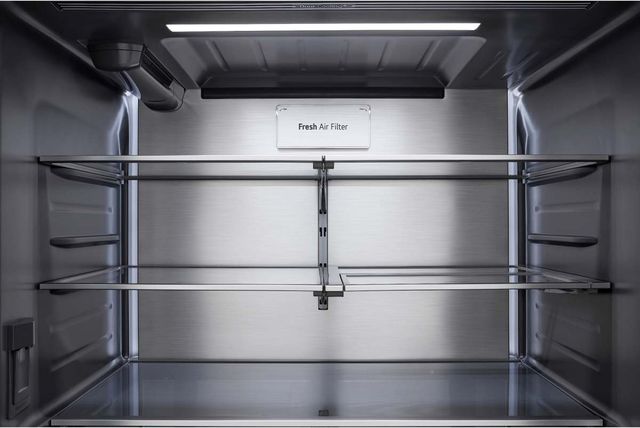
Service calls cluster in a short list, and it is nearly the same list for every brand:
- Ice makers, by a wide margin the most common complaint category
- Through-the-door water and ice dispensers, including the chute door and auger
- Electronic control boards and user interface panels
- Evaporator fan motors
- Defrost systems, including heaters, thermostats, and clogged drain lines
- Compressors, which fail least often but cost the most when they do
In-door ice makers add plumbing, insulation, and a motor to a moving door, which is a mechanically demanding place to put a water system. An interior ice maker in the freezer compartment is simpler and more reliable, at the cost of losing freezer shelf space. If ice is not central to your routine, the most reliable refrigerator brand for you is whichever of these four builds a model without a dispenser.
Compressors and Smart Features
Linear and inverter compressors run at variable speed rather than cycling fully on and off. They are quieter, use less energy, and hold temperature more steadily, and manufacturers typically back them with extended limited parts coverage of ten years. That coverage is a signal worth reading, though it is usually parts only.
Smart connectivity is a mixed bag told honestly. Temperature alerts and door-ajar notifications have genuine value, because they can save a freezer full of food when something goes wrong while you are away. A screen on the door that shows photos is a component that can fail on an appliance you expect to keep for 12 years.
Do French Door Refrigerators Break Down More Often?
Somewhat, and the reason is components rather than brand quality. A French door model with an in-door dispenser and dual ice makers has more failure points than a top freezer, so statistically it will need service more often. That does not make French door a bad choice, since it is the most usable configuration for most kitchens. It means the honest comparison is between a French door unit with a dispenser and one without, where the version without typically needs less service.
Refrigerator Brand Reliability Comparison at a Glance
| Brand | Reliability Reputation | Price Tier | Strongest Configurations | Standout Technology | Warranty and Parts |
|---|---|---|---|---|---|
| Whirlpool | Consistently strong, few surprises | Budget to mid-range | French door, side by side, top freezer | Shared platforms across KitchenAid and Maytag | 1 year parts and labor; parts widely stocked |
| LG | Strong, with ice makers the usual service item | Mid-range to premium | French door, counter depth French door | Linear inverter compressor | 1 year full; typically 10 year limited compressor parts |
| Bosch | Very strong, simpler feature sets | Premium | Counter depth French door, bottom freezer | Dual evaporator cooling | 1 year full; smaller service network |
| GE and GE Profile | Consistently strong across the line | Budget to premium | French door, side by side, built-in | Broad line from basic to Café trim | 1 year full; excellent local parts access |
Read the table by matching the configuration column to your kitchen first and the price tier second. For a typical Phoenix household buying a mainstream French door refrigerator, Whirlpool and GE offer the best combination of low service rates and fast, inexpensive repairs when something does go wrong. For a buyer prioritizing longevity over features, Bosch in a counter depth configuration without a through-the-door dispenser is the strongest pick on this list.
Warranties, Service and What Happens When Something Breaks
Refrigerator warranties are more layered than most buyers realize, and the layers are where the money is.
What Standard Coverage Actually Includes
The typical structure is one year of full parts and labor coverage on the entire unit, followed by longer limited coverage on specific components. Sealed system parts, meaning the compressor, condenser, evaporator, and connecting tubing, often carry five years. Compressors alone frequently carry ten.
The distinction that costs people money is parts-only versus parts-and-labor. A ten-year compressor warranty usually covers the compressor itself and nothing else. Replacing a compressor is a full day of skilled work plus refrigerant, recovery, and a vacuum pull, so a covered compressor in year eight can still produce a bill in the high hundreds. Read which years include labor, because that is the number that matters.
Extended Warranties and Protection Plans
Balanced guidance rather than a sales pitch: extended coverage generally makes financial sense on complex, expensive units and generally does not on simple, inexpensive ones. A built-in column refrigerator with dual compressors and a control board worth several hundred dollars is a reasonable thing to insure. A basic top freezer is not, because the plan can cost a meaningful fraction of what a replacement would.
Evaluate Service Access Before You Buy
This is the part national roundups skip entirely, and it changes ownership more than a rating point difference between two brands.
- Ask whether local technicians are factory authorized for the brand, not just willing to work on it
- Ask what typical parts lead time looks like for that brand in your area
- Ask whether the retailer performs service directly or refers you to a third party
- Ask who you call in year three, and confirm it is a phone number in Arizona
A refrigerator that needs one repair in ten years, handled in three days by a local technician, is a better ownership experience than one that needs no repairs but would have taken three weeks and a parts order from out of state if it had.
Repair or Replace
The working rule most technicians use: if the repair costs more than half the price of a comparable new unit and the refrigerator is more than eight years old, replace it. Under eight years with a repair under a third of replacement cost, fix it. Between those, the deciding factors are whether the failure is a sealed system problem, which tends to signal the end, or a component like a fan or control board, which does not.
One habit our service department wishes every customer had: on delivery day, register the unit and photograph the model and serial plate, which usually sits on the interior wall behind the crisper drawers or along the upper left liner. Every warranty claim starts with those numbers, and pulling a fully loaded refrigerator away from the wall to read a sticker is the worst possible time to find them.
Most Reliable Refrigerator Brand Choices: Pros and Cons
Shopping reliability first means letting service data steer the decision instead of the door design or the feature list. That approach genuinely lowers your total cost and your aggravation over a decade, but it also means saying no to some things you might want. Here is the honest accounting.
Pros
Fewer service calls and less food loss
A unit that never quits also never fills a trash bag with thawed groceries, which is the hidden cost people forget to price.
Lower total cost across ten years
Purchase price is one number, but repairs, food loss, and energy use across a decade routinely add up to more than the gap between a reliable model and a risky one.
Better parts availability and faster repairs
High-volume brands with simple platforms get fixed in days rather than weeks, because the part is already on a local truck.
Stronger value in a built-in kitchen
In a remodeled kitchen where cabinetry was built around the refrigerator, a long-lived unit protects the design rather than forcing a compromise replacement in year six.
Cons
You give up features or a specific look
The simplest, most dependable configurations often lack through-the-door ice, a flex drawer, or the exact panel-ready styling a kitchen design called for.
Rankings cannot predict your individual unit
Reliability data describes populations, not the specific refrigerator on your delivery truck, so a strong brand still occasionally produces a lemon.
How to Make Any Refrigerator Last Longer
Maintenance separates a refrigerator that reaches 15 years from one that quits at eight, and almost none of it is difficult.
The Tasks That Measurably Extend Life
- Clean the condenser coils twice a year: Dust on the coils forces the compressor to run longer and hotter, which is the most common preventable cause of early failure.
- Check and clean the door gaskets: Wipe them with warm soapy water and test the seal by closing the door on a dollar bill. If it slides out easily, the gasket needs attention.
- Replace the water filter on schedule: Usually every six months, and a clogged filter reduces ice production and stresses the water valve.
- Keep clearance around the unit: Manufacturers specify air space at the sides, back, and top. Crowding a refrigerator into a tight cabinet opening starves the condenser.
- Clear the defrost drain: Water pooling under the crisper drawers almost always means a clogged drain line, and clearing it early prevents ice buildup and fan damage.
- Level the unit: Proper leveling lets doors self-close and lets condensate drain where it should.
Settings and Loading
Set the refrigerator to about 37 degrees and the freezer to 0 degrees. Running colder than that wastes energy without improving food safety or shelf life. Keep the refrigerator reasonably full, since thermal mass helps hold temperature, but do not block the interior vents that circulate cold air, and let hot leftovers cool on the counter before they go in.
For the ice maker, run through the ice bin occasionally rather than letting old cubes sit and fuse. Before a long trip, turn the ice maker off and shut the water supply valve, which is the single most effective way to avoid coming home to a flooded floor.
The Warning Signs Worth Acting On
- The compressor running constantly instead of cycling
- New or unusual noises, especially clicking or a loud hum
- Warm spots in one section while another stays cold
- Frost building up on the freezer walls or around the vents
- Water pooling under the crisper drawers or beneath the unit
A Seasonal Schedule to Put on the Calendar
- Monthly: Wipe the gaskets, check for water under the crispers, and glance at the temperature display.
- Every six months: Replace the water filter and vacuum the condenser coils.
- Spring, before the hot months: Pull the unit out, clean thoroughly behind it, and confirm clearance and leveling.
- Fall: Clear the defrost drain, empty and clean the ice bin, and check that the doors close on their own from a few inches open.
What to Prioritize When You Shop for a New Refrigerator
Reliability research narrows the brand list. These steps turn that into the right purchase.
Measure Before You Fall in Love With a Model
- Opening width, height, and depth of the space, including any cabinet above
- Depth including the handles, which standard depth models often exceed by two to three inches
- Door swing clearance, especially against a perpendicular wall or an island
- The delivery path: front door width, hallway turns, and whether the refrigerator doors must come off to make it through
Counter Depth Versus Standard Depth
Counter depth refrigerators sit roughly flush with your cabinet fronts, which looks better and keeps a walkway clear. The cost is capacity, since a counter depth unit typically gives up three to six cubic feet compared to a standard depth model of the same width. Standard depth buys more storage and protrudes into the room. Neither is more reliable, so this is a design and space decision rather than a durability one.
Capacity, Utilities and Efficiency
As a rough guide, plan on 18 to 20 cubic feet for one or two people, 20 to 25 for a family of three or four, and 25 cubic feet or more for five or more. Confirm the outlet location, which should be positioned so the unit can sit flush, and check for a water line if you want ice and water. If no line exists, a plumber can usually run one from a nearby supply, and that work should be scheduled before delivery day rather than after.
ENERGY STAR certified refrigerators use meaningfully less electricity than the federal minimum, and a refrigerator runs 24 hours a day for over a decade. Annual operating cost belongs in the total ownership math right alongside reliability. Finish matters too, and fingerprint resistant stainless is worth having in a house with kids. Panel ready models disappear into cabinetry entirely, which is why they show up in remodels.
Questions That Reveal Real Differences
Ask these on a showroom floor and the answers will tell you more than any spec sheet:
- Which models in this brand come back to your service department most often?
- Is this unit serviced by your own technicians or a third party?
- What is the typical parts lead time for this brand here?
- Which years of the warranty include labor, not just parts?
- Does this model have an in-door ice maker, and is there a version without a dispenser?
Seeing a unit in person settles what pictures cannot: shelf layout, drawer glide feel, door bin depth, and whether the interior lighting reaches the back of the bottom shelf.
Why Arizona Kitchens Are Harder on Refrigerators Than Most
A refrigerator in Phoenix works harder than the identical unit in Ohio, and the reasons are specific enough to change what you buy. Ambient temperature drives compressor workload directly, so a kitchen that sits at 80 degrees in July asks noticeably more of the sealed system than one at 70. Garage refrigerators, which are close to standard equipment in Valley homes, are the extreme version of this: most standard refrigerators are rated to operate in ambient temperatures up to roughly 100 to 110 degrees, and a Phoenix garage exceeds that for weeks every summer. Beyond heat, the Valley adds fine dust from monsoon season that coats condenser coils faster than in most of the country, and hard water that scales up water valves and clogs filters ahead of schedule.
- Buy a garage-ready model if the second refrigerator lives in the garage, since standard units can stop cooling or run continuously above their rated ambient temperature.
- Clean condenser coils twice a year here rather than once, and add a third pass after a heavy monsoon week if the unit sits in a garage or near an exterior door.
- Give the unit its full manufacturer clearance even if the cabinet opening allows less, because heat rejection is harder in a hot room.
- Expect to change water filters closer to every four to six months than every six, since Valley water hardness loads filters faster.
- Avoid placing a refrigerator where afternoon sun hits it through a west-facing window or a sliding door, which is a common layout in Valley homes and adds real compressor runtime.
- Plan for a surge protector or whole-home surge protection, since monsoon storms bring the outages and voltage events that damage electronic control boards.
Read more:
Why Is My Refrigerator Hot? Summer Troubleshooting Guide
Unlock Great Value with Our Whirlpool Refrigerator Reviews [+ Our Top 6]
Reliable Refrigerators Available at Spencers TV and Appliance
The lineup below spans the configurations discussed above rather than repeating one style four times, so the reliability guidance maps onto real models. Two of these are counter depth French door units from LG, one is a straightforward large-capacity French door model, and one is a panel-ready undercounter unit for a kitchen where the main refrigerator is not the only refrigeration in the room. Our team can walk through warranty terms and local service coverage on any of them.
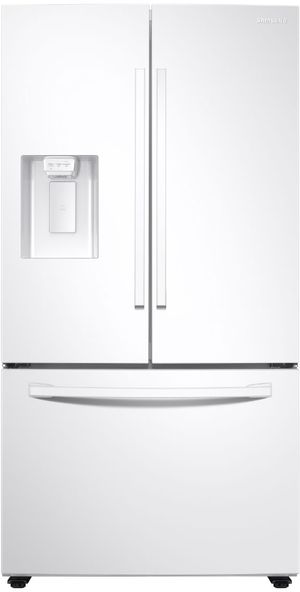
Samsung 27.0 Cu. Ft. Fingerprint Resistant Stainless Steel 3-Door French Door Refrigerator
Shop French Door Refrigerators
This is the configuration-simplicity argument in physical form. At 27 cubic feet it is the largest capacity in this group, sized for a family of four or five with room for a full Costco run, and the three-door French door layout keeps everyday food at eye level with the freezer below. Fingerprint resistant stainless is the practical finish choice in a house with kids. It sits in the mainstream tier rather than the flagship tier of Samsung’s line, which per the reliability logic earlier means fewer electronic components between you and a working refrigerator.
Top Features
- 27.0 cubic foot capacity: Large-family storage, comfortably above the 25 cubic foot threshold for a household of five.
- Three-door French door layout: Refrigerated food at eye level with a full-width freezer drawer below, the most usable everyday configuration.
- Fingerprint resistant stainless steel: Holds a clean look in a busy kitchen without constant wiping.
- Mainstream feature set: Fewer added electronic systems than a flagship four-door model, which is the configuration choice that lowers service rates.
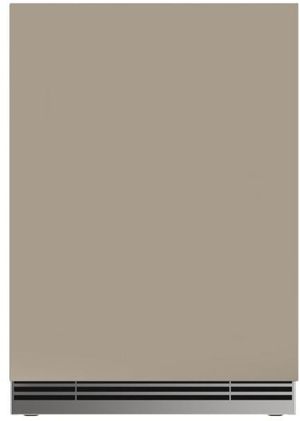
U-Line Home Collection 24” 5.1 Cu. Ft. Panel Ready Refrigerator with Solid Door
Shop Undercounter Refrigerators
Undercounter refrigeration is where cheap units go to die after three summers, and U-Line is the reason to buy this category properly. This 24 inch panel-ready unit accepts a custom cabinet front, so it vanishes into an island, a butler’s pantry, or a Valley patio bar area instead of announcing itself. The solid door keeps contents out of sight and insulates better than glass, which matters in a hot room. As a purpose-built specialty refrigerator rather than a scaled-down full-size design, it is engineered for the kind of continuous duty that kills compact units.
Top Features
- Panel ready front: Takes a custom cabinet panel so the unit matches surrounding millwork exactly, ideal for islands and entertaining spaces.
- 24 inch undercounter fit: Drops into a standard base cabinet opening without a remodel.
- 5.1 cubic foot capacity: Real usable volume for beverages and overflow, well beyond a dorm-style compact.
- Solid door construction: Better insulation than a glass door, which is the right call in an Arizona kitchen or covered patio.
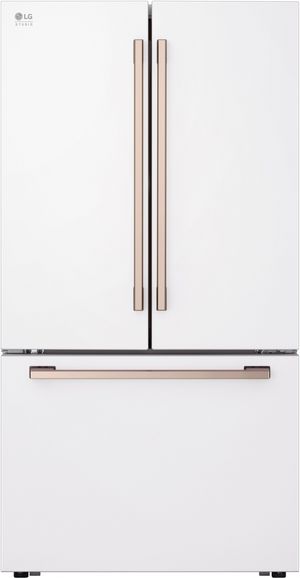
LG STUDIO 36 in. 26.5 Cu. Ft. Essence White Counter Depth French Door Refrigerator
Shop French Door Refrigerators
This is the design-forward pick, and the essence white finish is the reason. Most counter depth refrigerators give up capacity for a flush look, and 26.5 cubic feet in a 36 inch counter depth cabinet is an unusually generous number for that trade. LG STUDIO is the brand’s premium line, so shelving, drawer feel, and interior lighting sit a tier above the mainstream. Behind the finish is the LG compressor technology discussed earlier, which is the reliability argument for this brand and typically carries extended limited parts coverage.
Top Features
- 26.5 cubic foot counter depth capacity: Unusually large for a flush-fitting cabinet, so the design choice costs less storage than it usually does.
- LG STUDIO premium tier: Upgraded interior fittings, lighting, and hardware over the mainstream LG line.
- Essence white finish: A designer alternative to stainless for kitchens built around light cabinetry.
- Inverter compressor technology: Variable-speed operation that runs quieter and steadier, backed by LG’s extended limited compressor parts coverage.
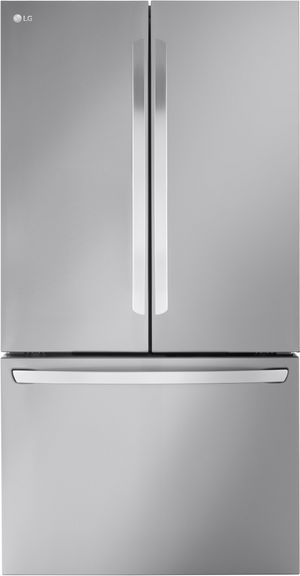
LG 36” 26.5 Cu. Ft. PrintProof Stainless Steel Smart Counter Depth French Door Refrigerator
Shop French Door Refrigerators
Same generous 26.5 cubic feet and same counter depth footprint as the LG STUDIO model above, in stainless and at the mainstream tier, which makes it the value play in counter depth French door. PrintProof stainless is the finish that survives a household where everyone opens the door with dinner on their hands. The smart connectivity is worth having for one specific reason covered earlier: temperature and door-ajar alerts can save a freezer of food while you are out of town, which is the smart feature with real value.
Top Features
- 26.5 cubic foot counter depth capacity: Flush cabinet fit without the usual storage penalty, sized for a family of four.
- PrintProof stainless steel: Resists fingerprints and smudges, which is the practical finish for a high-traffic kitchen.
- Smart alerts: Door-ajar and temperature notifications that can prevent food loss while the house is empty.
- Inverter compressor: Variable-speed cooling for quieter operation and steadier temperatures, with LG’s long limited parts coverage on the compressor.
Our showroom floors carry more refrigerator brands, sizes, and finishes than this lineup, including top freezer and side by side configurations. Our staff can compare reliability records and service coverage with you in person, which is a conversation worth having before a purchase this size.
Choosing the Most Reliable Refrigerator Brand for Your Kitchen
Reliability comes from three things working together: a brand’s track record, the simplicity of the configuration you choose, and the quality of the components inside it. The most reliable refrigerator brand for one household is not automatically right for another, because a counter depth kitchen, a garage second unit, and a large family with an ice habit are three different problems. Warranty terms, local service access, and twenty minutes of maintenance twice a year influence real-world longevity as much as the badge on the door.
Come compare them in person. Shop refrigerators at Spencers TV and Appliance online or visit a showroom in the Phoenix metro to open the doors, feel the drawers, and see which interiors actually work for how you shop. Our staff can tell you which models come back to our own service department, our crews handle delivery, professional installation, water line hookup, and haul-away of the old unit, and our service and warranty support stay local in Arizona for the whole life of the appliance. That combination is what an independent Arizona retailer offers instead of a delivery appointment and a call center in another time zone.
Read more:
Sub-Zero Refrigerator Series Explained
Refrigerator Lifespans by Brand
Frequently Asked Questions about the Most Reliable Refrigerator Brand
Built-in and column brands such as Sub-Zero are engineered for the longest service lives, often 20 years or more, while among mainstream brands Whirlpool, Bosch, LG, and GE consistently reach 12 to 15 years with routine maintenance. Configuration matters as much as the badge, since a simple top freezer from any of these brands usually outlives a feature-loaded four-door model from the same company.
A modern refrigerator typically lasts 10 to 15 years, with simpler top freezer and bottom freezer designs often reaching the upper end of that range. Replacement generally makes more sense than repair once the unit passes eight years and the quoted repair exceeds half the price of a comparable new refrigerator.
French door refrigerators do need service somewhat more often, but the cause is component count rather than brand quality, since they add a freezer drawer, an ice maker, and frequently a through-the-door dispenser. Choosing a French door model without a dispenser removes the most service-prone assembly while keeping the layout that makes the configuration so popular.
Extended coverage generally pays off on complex, expensive units such as built-in, column, and feature-heavy four-door refrigerators, where a single control board or sealed system repair can run into four figures. On a simple, moderately priced top freezer or basic French door model, the plan cost is often a large fraction of replacement cost, so it makes less financial sense.
Repair rates track feature complexity more closely than nameplates, so within nearly every brand the models with through-the-door dispensers, dual ice makers, flex-temperature drawers, and touchscreens generate the most service calls. Rather than avoiding a brand outright, compare specific models and ask a local retailer’s service department which units they see most often.
Repair a refrigerator when it is under about eight years old and the quoted repair costs less than a third of a comparable new unit, particularly for parts like fan motors, control boards, or door gaskets. Sealed system failures on an older refrigerator point the other direction, since compressor work is expensive and often signals that other components are near the end as well.
Why Trust Spencers TV & Appliance?
Since 1973, Spencer’s TV & Appliance has grown to 11 locations throughout the Phoenix Metropolitan Area. The secret to our longevity is simple: personal service. Customer satisfaction has always been the focus of our business, and throughout the years, we have been able to work hard with our suppliers to bring you the best prices. After all, getting customers the best price and personal attention is how we compete with big-box stores, day in and day out.
Not only do we offer top-rated appliances, name-brand electronics, and the best mattresses on the market but we also provide water treatment solutions and perform kitchen design services. Stop by your nearest Spencer’s and see what you’re missing!
Shop Tvs at Spencers
At Spencers TV & Appliance, we provide high-quality, name-brand products at great prices. Your friends in the business are always happy to help you choose the best mattress for lower back and leg pain. Call us, or better yet, stop by at one of our locations in the Phoenix, Scottsdale, and Glendale regions. Visit us today!